


By Annerine Wenhold, ASA Level II and VSAAV Level III coach
Introduction
As coaches, we all know the importance of providing coaching based on an athletes individual needs. But do we really apply this in practice? We often group our athletes together and train them on a single ‘best-practice’.
In this article, the importance of both speed and power as key high jump variables will be discussed. I will argue that it is necessary to distinguish between the so-called speed and power jumpers in training. This will be substantiated with the mechanics of the jump (with a specific focus on the power and speed variables) and the sub-categorisation of jumpers based on the application of speed and force in their jumps as well as their body types.
Part II of this article will build on this foundation, and provide further material for practical consideration and application in training. The importance of other training components, such as periodization, has purposefully been excluded from this discussion.
Note that for the purpose of this article, the terms of speed and velocity, as well as force, power and strength are being used interchangeably.
Mechanisms of high jump
Speed (velocity) and power (force) as well the direction of its application are important variables in the quest for increased height. These variables will be discussed at the hand of the following jumping phases:[i]
Phase 1: Jumper starting the approach and gradually accelerate towards the control point.
Phase 2: As second phase of the approach, accelerating in an arc towards the bar.
Phase 3: Projectile motion of the jumper off the ground towards clearance of the bar.
The role which speed and force play in each of the phases will now be discussed.
The case for speed (velocity)
Speed (velocity) plays an important role in all three jumping phases.
In the run-up, controlled horizontal velocity is important to set the jumper up towards the acceleration into the jump and the jump itself. The acceleration equation 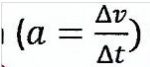 with a the acceleration and v the horizontal velocity over time (t) applies.
In the second phase, the centrifugal force (F) is crucial. Defined as 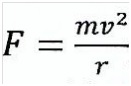 , where v is again the horizontal velocity (r the radius of trajectory and m the athlete’s mass), an increase in horizontal velocity will directly have a positive impact on the angular momentum.
The jumper’s centre of mass path through the air follows a parabolic trajectory towards the clearance of the bar (third phase) This path is velocity dependant, and characterized by a constant horizontal velocity (obtained through the approach run) and constant downward acceleration (due to gravity).[ii],[iii] The standard projectile motion equation from Newtonian mechanics provides insight into the relationship between these elements towards optimal height: 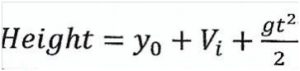 ,[iv] where y0 is the distance that the athletes centre of mass is from the ground, Vi is the initial velocity prior to the jump. This velocity is determined by both the horizontal velocity obtained through phases 1 and 2 of the jump, and the vertical velocity before the jump
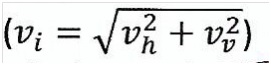 g is the gravitational forces, t is the time
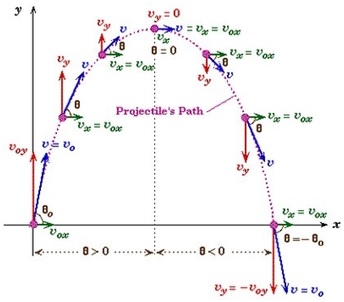
Figure: Parabolic flightpath of a high jumper
Thus, the horizontal velocity at plant will influence the vertical velocity and therefore the height reached in the jump.
The case for power (force)
All of Newton’s laws of motion applies to high jump. In the approach (phases 1 and 2), overcoming inertia (Newton’s 1st law), then accelerating towards the bar (2nd law), and lastly during the plant (3rd law – for every force there is an equal in quantity but opposite in direction), force is required.
Combining Newton’s 2nd law of motion (F=ma, F=force in direction of acceleration and m the athlete’s mass) equation with the momentum equation, results in 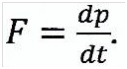 . Thus, force is redefined as the rate at which the momentum is change (the angular momentum).
Furthermore, the rate of change in momentum is directly proportional to the resultant force applied with movement being in the direction of this force.
Thus, the force applied at plant will influence the vertical velocity and therefor, as previously with speed, the height reached in the jump.
A balancing act
For an optimal jump, a balance needs to be achieved between force impartation over the greatest range of motion. This needs to be achieved over the least amount of time (thus highest velocity) at the time of plant.
Furthermore, the jumper can only influence the momentum and parabolic trajectory up to the point of plant. The velocity of the approach, and the steepness of the launching angle will contribute to the parabola of flight. Once off the ground, the centre of mass’s parabolic curve (including its angle as well as velocity) is unchangeable.
The posture of the athlete at plant will thus influence the amount of force and velocity that are transferred into the jump, as well as the parabolic trajectory. With a deeper knee bend at plant, more force can be applied. Whilst with less flexion in the knee, as well as less time spend on plant, an increased amount of horizontal velocity can be maintained and transferred to generate the vertical lift.[v]
Individual make-up and identification of the different types of jumpers
Jumpers can thus manipulate these variables towards gaining height. Based on the individual make-up of your jumper, the relative contribution of these variables will differ. This difference have contributed to the sub-categorization of jumpers into two distinct categories: speed and power jumpers.
So how can these jumpers be identified? To answer this question, it is necessary to look at their genetic and central nervous system tendencies, including body type:


Figure B: Edric (13yrs) and Pieter (15yrs) displaying the Ecto- and Mesomorph body types[vi], [vii]
Speed jumpers
Speed jumpers are typically those gifted in the structural department, with long legs and Achilles tendons, small joints and a low body fat percentage. As a typical ectomorph, they might find it difficult to build muscle – and thus to influence the power variable in their jump considerably. These jumpers usually rely on their reactive ability (elastic strength), and naturally favours the least amount of time at plant.
In the approach, they by and large run with tall hips and good mechanics (if that skill has been acquired). Their last step toward take-off will typically be with little knee bend (and lowering of the centre of mass) to allow for the rapid take-off contact. They use their ankles and hips well in the last portion of the bar clearance by extending their ankles and hips completely and quickly. They are the hip dominant jumpers with strong ankles to allow for the short amortization phase (the time spend changing direction as you are on the ground just before a very fast take-off).
Another way to identify this type of athlete will be by looking at his/her other events, as they typically excel in sprints, long jump or hurdling.
Power jumpers
Power jumpers are generally naturally stronger in the lower body, with thicker muscles and joints. Leaning more to the mesomorph body type,iv,v these athletes typically have high metabolisms, can build muscle easily due to responsive muscle cells but can also gain fat easier than their ectomorph counterparts. With their natural power, they favour a larger degree of range of motion at the plant in order to apply their absolute strength and explosive power. This is evident in a deeper knee bend before take-off.
It is worth noting that body types and its tendencies aren’t set in stone, and many talented jumpers are a combination of the ectomorph/mesomorph body types,vii and may display a combination of the factors presented above based on their unique characteristics.
Considering the exceptions
Strength as a physical characteristic is best developed after puberty. Woman – with higher percentage of elasticity than strength[viii] – and youth will thus typically favour the velocity take-off mechanisms.
In Conclusion
Both velocity and force are important variables in high jump, and the athlete who is best equipped to apply most force in the shortest period of time will jump the highest. The relative contribution of these variables towards an optimal jump will vary between jumpers, and needs to be considered in athlete development.
The speed jumper is your typical hip dominant jumpers who will rely on their velocity and ectomorph build to gain jumping height. The power jumper on the other hand, with their higher natural strength level and potential lesser speed, are knee dominant and will apply that force in the jump.
References
[i] Smith, Joel. “7 Philosophies on Increasing Vertical Jump Skill and Power”, Freelap, https://www.freelapusa.com/7-philosophies-on-increasing-vertical-jump-skill-and-power/, viewed 8 March 2017
[ii] Stone, Glen. “Projectiles”, High Jump Coach, High Jump On-line book, http://www.highjumpcoach.com/HJCbook/Phy/Proj, viewed 13 March 2017
[iii] Mohan, Rajagopalan. “Dev Blog: Designing a Jump”, AtomJack, August 11, 2014, http://www.atomjack.net/blog/2014/12/9/dev-blog-designing-a-jump, viewed 13 March 2017
[iv] Cooke, Paige. “High Jump Analysis”, Undergraduate Journal of Mathematical Modelling: One+Two, Volume 5, 2012 Fall, Issue 1, Article 4, http://scholarcommons.usf.edu/cgi/viewcontent.cgi?article=4849&context=ujmm, viewed 13 March 2017
[v] Dick, Frank W. ‘High Jump”, 8th edition, 1980
[vi] Snape, Joel. “Ectomorph, Endomorph and mesomorph: How to train for your body type”, Coach, 21 December 2016,
http://www.coachmag.co.uk/lifestyle/4511/ectomorph-endomorph-or-mesomorph-what-is-your-body-type, viewed 13 March 2017
[vii] “Your Body Type – Ectomorph, Mesomorph or Endomorph?”, MS, https://www.muscleandstrength.com/articles/body-types-ectomorph-mesomorph-endomorph.html, viewed 13 March 2017
[viii] Dick, Frank W. ‘High Jump”, 9th edition, 1993