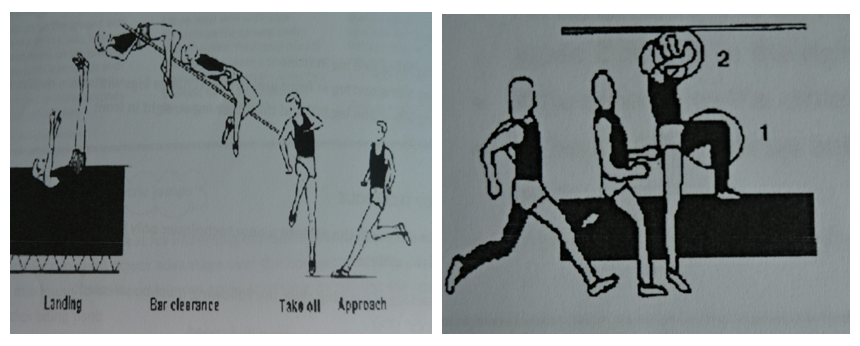
DRIESPRONG: Die drie fases van die sprong


Deur Rudolph Cloete, VSAAV Vlak III

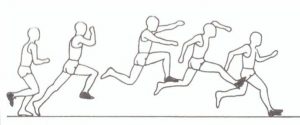
Die Driesprong bestaan werklik uit drie spronge wat tussen die vastrapplank en die put gemaak moet word! Dit is die hink/”hop”, stap/”step” en sprong/”jump”.

Die aanloop:

Die Driesprongaanloop en die Verspringaanloop is presies dieselfde: dieselfde lengte, dieselfde spoed en dieselfde tegniek in die versnelling.

Die vastrap/aftrap

Die Driesprong se vastrap/aftrap verskil heeltemal van die van die Verspring! In Verspring maak die atleet gereed om hoogte vanaf die vastrapplank te kry. Dus is sy vastrap hard op die plank en sy opswaaibeen word tot bokant horisontaal, kragtig opgeswaai!

Die driespronger hardloop oor die plank en trap minder hard op die plank. Die opswaaiknieg beweeg slegs tot op die horisontaal. Dus dryf die driespronger voorentoe en nie op vir hoogte nie!

Die hink/”hop”

2020-04-04_060802

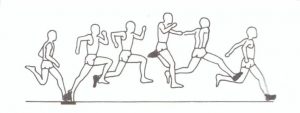
Die hink is die laagste van die drie fases, want dit het nog volop sproed om mee te werk. Die vastrapbeen buig en kom onder die sitvlak deur en roteer totdat daar weer op dit geland word. Die bolyf bly neutral en regop – arms roteer saam met been.

Die hink moet 30% van die totale sprong uitmaak.

Die stap/”step”

2020-04-04_060955

Dit is die moeilikste deel van Driesprong! Dis hier waar die kaf van die koring geskei word.

Die Stap moet gespring word en nie gehardloop word nie. Die beginneratleet is geneig om dit te hardloop en himself so voor te berei om die derde fase, nl. die sprong, lekker ver te maak. Die probleem is dat ‘n hardlooptreë nooit so lank soos ‘n spingtreë sal wees nie EN hierdie fase moet 30% van die totale sprong uitmaak.

In die Stap word die vrybeen kragtig deurgeswaai en op horisontaal geblok. Die posisie word gehandhaaf totdat die voorwaardse momentum so afgeneem het dat die vrybeen se voet op die grond gesit kan word. Bolyf by neutral en regop. Arms swaai gesinkroniseerd met die been.

Die Stapfase is hoër as die sprongfase, want die atleet se voorwaarde spoed het afgeneem.

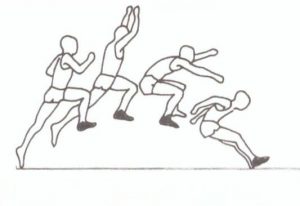
Die sprong/”jump”

2020-04-04_061145

In die Spong word daar, net soos in Verspring, na die die hoogste moontlike liggaamsposisie gestrewe…die hoogste, want in hierdie fase is al die spoed waarmee die atleet begin het, amper opgebruik! Die atleet moet hard werk, want hy spring van sy swakbeen af, tog moet hierdie fase 35% van die totale sprong uitmaak.

Die meeste atlete gebruik die seilmetode van verspring: dus word die bene saam opgeswaai en die atleet trek in ‘n sittende posisie op pad na die landing.

Sprongverhoudings

Soos hierbo gesê, is die strewe ‘n 35% – 30% -35% verhouding. Dit is die ideal, maar in die praltyk sal dit van die atleet se fisiese eienskappe en kragvermoeë afhang:

As hy vining is, sal die verhouding eerder 40% -33% -27% wees!

Meisies spring amper ook so ‘n verhouding 43% -32% – 26%

Sterk seuns, maar bietjie stadiger, kom gewoonlik nader aan die optimum!

Bronne: 

1.  U.Jonath/E.Haag/R.Krempel, Atletiek, training, techniek,taktiek., Elmar Sport, 1977

  1. Bullard, L. Knuth, Triple Jump Encyclopedia. The Athletic Press, Pasadena, California, 1977


How to find high jumpers!


HOW TO FIND HIGH JUMPERS

by Mike Rosenbaum . Updated May 09, 2017

If you coach younger athletes, one of your key challenges is to place them in the right events. Sometimes it’s easy. You’re not going to make the 250-pound football lineman a sprinter, or the 100-pound whippet a shot-putter. Selecting high jumpers isn’t quite that simple, but certain physical characteristics make an athlete more likely to succeed in the high jump. The following recommendations are based on a February 2013 presentation by 6-time All-American high jumper Holly Thompson, who spoke at the Michigan Interscholastic Track Coaches Association’s annual clinic.

What Body Type Do You Look for in a High Jumper?

Someone that’s fairly tall, fairly high center of gravity, real long legs. You look for someone that is willing to try new things, that’s not scared – kind of fearless. Someone that has good kinesthetic awareness. For example, if you had a gymnast who got too tall to do gymnastics anymore, they’re really good high jumpers, because they know how to maneuver their body in the air. In (Florida) we have a lot of divers – divers are good high jumpers as well because they can maneuver their body in the air. Maybe figure skaters, you might run into that some time. Athletes that have good kinesthetic awareness, meaning they can get spun around in the air and not lose their body position. Or they have the ability to slightly move their body in the air, which is hard to do.

There are two types of jumpers. One type is a speed jumper – tall, long legs, fast runner, not so muscular.

Someone that uses their speed to jump off the ground. Typically, their flight pattern is up over the middle of the bar and down, slight lowering of the hips. Then there’s the power jumper, a more muscular, powerful person, that tends to get a little bit lower at takeoff because they have the strength to get back up.

They tend to run a little bit closer to the standard, and they tend to jump up and down. What’s the best method? There’s no best method. The best is a combination of both. Having a speed jumper who comes in fast and yet jumps up and down is a great combination.

Exceptions to the Rule

I high jumped against a woman named Yolanda Henry. She was 5-6 tall and jumped 6-6. So you have some athletes that just have huge ‘ups,’ and sometimes you run into that, and they take off and do really well. You also might have a tall girl, for example – you see this many times – a tall girl that’s 6-foot tall and they come out to high jump and they just can’t get off the ground, because they’re bigger girls. A lot of volleyball girls, basketball girls tend to be very big-boned individuals. So what you’re looking for in a high jumper is someone that has a very lean, lean body mass. Because you have to remember the objective in the high jump is to take all of this body weight that you have, up and over the bar. All of this horizontal speed, and take it vertically in a split moment.

Which Athletes Make Strong High Jumpers?

We want to look for some pretty decent athletes. You want to look for your 400-meter runner, how they look when they’re running down the backstretch – head tall, bouncy, active – 300-meter hurdlers, 400-meter runners, some 200-meter runners, those are your high jump types.

High jump and long jump, even though they are both jumps and they both have penultimate steps, they’re really not related at all. They’re a completely different thing. There’s no real relationship there.

At the same time, you get a lot of boys that come out, they want to high jump, a lot of basketball players. Basketball season ends and they want to high jump. Those guys tend to be real tall, thin guys. There’s a fine line between being awkwardly kind of goofy running, and being a legit athlete, as far as strength is concerned in the high jump.


Speed vs. Power Jumpers in High Jump, Part II


 By Annerine Wenhold, ASA Level II and VSAAV Level III

Introduction

This article serves as a continuation of the discussion on the importance to distinguish between different types of high jumpers. In Part I, the importance of both speed (velocity) and power (force) as key high jump variables were discussed.  The mechanics of the jump – with a specific focus on the speed and force variables – and how the different applications thereof in jumpers can be identified – were investigated. It was argued that by sub-categorising jumpers, improved specialisation and individualisation of training can be obtained.

Part II of this article will build on this foundation, and provide further material for practical consideration and application in athlete development. These were derived from my own time as an athlete and coach, and supported by literature.

The importance of other training components, such as case specific high jump technique and periodisation, has purposefully been excluded from this discussion.


Key physiological components towards continual jump improvement

There is no single piece of advice towards an optimal training program, as each athlete operate in a specific environment with and have a unique force-velocity-coordination-stability profile. The difference of an individual’s physiological make-up (including jumper size, strength, body type, limb lengths, and fast twitch fibre ratio) will furthermore predictably determine what type of training stimuli he/she responds best to.

As a starting point, let us consider which key components must be addressed to continually improve jump performance:[i]

Jump 1

Figure: Key physiological components towards jump improvement

The first component, specific work capacity, refers to building a tolerance/ability to jump maximally and in sufficient volume to deliver repeated results. This needs careful consideration in the program periodization.

The second component is speed (velocity), with a focus on the acceleration component. As argued in Part I, this component is crucial, and improvement of the controlled velocity at plant and take-off – if all other variables stays constant – will result in jump improvement.

The third component refers to the rate of force development to enable the jump. Note that its focus is not merely on force itself, but the ability to translate this force into vertical velocity.

Let’s look at the velocity and force components in more detail; with advice generic in nature to be applicable to both the speed and power jumper:

To sprint or not

This is a no brainer – as illustrated in Part I, velocity is a key element of jumping, and as such should form part of any jumpers program. Short sprints remain the best way to develop and maintain sprinting speed,[ii] and jumps at speed is key.

For those jumpers needing improvement in max velocity, flying sprints (gradually acceleration coupled with high velocity sprints in a relaxed state) will be beneficially. For those needing force, a combination of accelerations, absolute speed and starts are recommended.

To lift or not

The benefits (or not) of lifting for the high jumper has been the debate around various coffee tables. The intention of gym work should however not only be towards gaining of strength, but rather to transfer skills to the event. Various benefits could be realised, including improvement of inter alia: posture and body awareness, coordination, joint stability, strength at key joint angles and torques, energy– laying the foundation for speed, jump and power progression.i,[iii],[iv],[v]

Both speed and power jumpers rely on a strength base to add stability to absorb eccentric forces created on planting and generate force to the ground at plant. Improving the athletes short response explosive ability will improve the jump.[vi],[vii]

Emphasis should be on exercises which will promote the greatest force over the range of motion at plant. Generic speaking, to be most effective, strength training should be in the 60-80% range (hypertrophy) and should be coupled with plenty of explosive plyometrics (0-30%), and reactive strength training (including speed drills and jumping).  Care should be taken towards correct lift mechanics and doing the lifts at manageable volumes.

Focus should be on max, explosive and reactive strength improvement. Essentials are:

  • Barbell hip thrusts to activate the glutes.
  • Olympic lifting for hip extension.
  • Ankle rocker drills (to improve the ability of the ankle or body to get the centre of mass through the mid-stance phase and create forward movement).[viii]
  • Tendon enhancement for plant maximisation.
  • Doing plenty of lifts with extension of the plantar flexion.
  • Supersets combining lifting with plyometrics has been found to be especially effective (and enjoyable).

Specific training interventions

Specific training interventions for speed and power jumpers are outlined below:

Jump 2

Speed jumper do’s

Usually your lanky athletes, these individuals have the advantage of a high centre of gravity (typically at hip height) at the initiation of the jump, and must build on that advantage by enhancing their natural strengths, which typically include strong hips and ankles, elastic strength and speed at take-off.

As a typical ectomorph[ix], these athletes might experience an initial rapid improvement via lifting, however, these results will quickly taper off (especially compared to their power Jumper counterparts). Their preference – and ability – lies in specific plyometric based movements and they will naturally take to these types of training regimes.

For strength gains, they may benefit from compound movements to maximise growth hormone release (e.g. Olympic lifts, deadlifts), plyometrics and running jumps (with a focus to reduce time at plant) and increased speed-strength training coupled with sufficient protein intake.[x]

Speed drills should form a significant portion of the training regime, and acceleration, max speed efforts and flying sprints will strengthen the velocity variable. Cardio should be limited.

Power jumper do’s

As your typical mesomorph, these athletes’ fast twitch muscles respond well to strength training. With their deeper knee bend at plant, they should do targeted strength training to ensure that their natural strength ability is fully developed and maximum power can be transferred to the jump.

They usually prefer and respond rapidly to barbell oriented movements (low volume of high intensity and power reps), and these can effectively be used. Further gains can be achieved through plyometrics and accelerative training methods (e.g. depth jumps which will improve longer response plyometric ability).ix 

As with their speed jumper counterparts, speed drills should form a significant portion of the training regime, and acceleration, max speed efforts and flying sprints will strengthen the velocity variable.

Further force-velocity training recommendations

Regardless of being a power/speed jumper, each athlete will have a unique force-velocity profile. Within their ability range, plenty of athletes are imbalanced towards either force or velocity, and an individualised training program to address the weaknesses is needed.[xi]  Consider to:

  • Apply Michael Yessis’s 1×20 training regime for high schoolers.[xii],[xiii]
  • Improve the athlete’s ability to yield a high force value in the plant by performing exercises such as a seated box jump.
  • Improve accelerative strength (velocity of ca. 0.5-0.7m/s) by performing a heavy compound movement (e.g. barbell squad/deadlift).
  • Improve strength-speed by using the Dynamic Effort Method (at ~0.8-1m/s velocity -dependant on the type of exercise); effort in the 20-60% range.
  • Improve reactive strength through depth jumps.
  • Improve isometric and trunk strength to prevent force leakage.
  • Perform deceleration based movements (with an eccentric emphasis), including high altitude landings with jumps or velocity overload exercises like Kettle Bell power bomb swings.
  • Improve force ability transfer by targeted sledge work on the track (max and acceleration based speed drills).
  • Remember full approach high jumps.Other exercise components must be kept in the program towards its building or maintenance. Keep in mind that all movements have a strength, speed and skill component, and where possible, these must be manipulated to improve the high jump range of movements.

Conclusion

No matter what your athletes’ dominant qualities are, improvement in jumping performance rely on targeted speed and strength training at such a volume and intensity to promote adaptation and progression. The relative ratio and nature thereof will differ based on the athlete’s individual ability and make-up.

The differentiation in exercise regime for your speed and power jumpers will be to their advantage. Further consideration towards technique application is required.

References

[i] Smith, Joel. “7 Philosophies on Increasing Vertical Jump Skill and Power”, Freelap, https://www.freelapusa.com/7-philosophies-on-increasing-vertical-jump-skill-and-power/, viewed 8 March 2017

[ii] Korfist, Chris. “5 Drills to Improve Vertical force and run really fast”, Freelap, https://www.freelapusa.com/5-drills-to-improve-vertical-force-and-run-really-fast/, viewed 14 March 2017

[iii]Strength Training Session”, Sport Fitness Advisor, http://www.sport-fitness-advisor.com/strengthtraining.html, viewed 14 March 2017

[iv]Health and Fitness for the future”, Fit Dyanmics, http://www.fitdynamics.com/gpage.html, viewed 14 March 2017

[v] Dionne, Cassie. “7 Reasons youth athletes need to strength train”, Breakingmuscle.com, https://breakingmuscle.com/learn/7-reasons-youth-athletes-need-to-strength-train, viewed 14 March 2017

[vi]Jump Training Lesson 3 – Individuality and Jumping Styles”, Higher-Faster-Sports.com, http://www.higher-faster-sports.com/jumptraininglesson3.html, viewed 22 February 2017

[vii] Dick, Frank W. ‘High Jump”, 9th edition, 1993

[viii] Korfist, Chris. “How to improve ankle rocker range of motion”, Freelap,  https://www.freelapusa.com/how-to-improve-ankle-rocker-range-of-motion/, viewed 6 February 2017

[ix] Snape, Joel. “Ectomorph, Endomorph and mesomorph: How to train for your body type”, Coach, 21 December 2016

[x] http://www.coachmag.co.uk/lifestyle/4511/ectomorph-endomorph-or-mesomorph-what-is-your-body-type, viewed 13 March 2017

[xi] Salwasser, Scott. 3 March 2017, “Optimizing Sprint & Jump Training Based on Individual Force-Velocity Profiling”, Just Fly Sports, http://www.just-fly-sports.com/training-based-individual-force-velocity/, viewed 5 March 2017

[xii] Yessis, Michael. “The revolutionary 1×20 strength training programme”, 2013

[xiii] DeMayo, Jay. Central Virginia Sport Performance, “Our program for the high school level”, http://www.cvasps.com/wp-content/uploads/2014/05/Our-Program-For-High-School-Athletes.pdf, viewed 22 March 2017


Speed vs. Power Jumpers in High Jump, Part I


By Annerine Wenhold, ASA Level II and VSAAV Level III coach

 Introduction

As coaches, we all know the importance of providing coaching based on an athletes individual needs. But do we really apply this in practice?  We often group our athletes together and train them on a single ‘best-practice’.

In this article, the importance of both speed and power as key high jump variables will be discussed. I will argue that it is necessary to distinguish between the so-called speed and power jumpers in training.  This will be substantiated with the mechanics of the jump (with a specific focus on the power and speed variables) and the sub-categorisation of jumpers based on the application of speed and force in their jumps as well as their body types.

Part II of this article will build on this foundation, and provide further material for practical consideration and application in training.  The importance of other training components, such as periodization, has purposefully been excluded from this discussion.

Note that for the purpose of this article, the terms of speed and velocity, as well as force, power and strength are being used interchangeably.


Mechanisms of high jump

Speed (velocity) and power (force) as well the direction of its application are important variables in the quest for increased height. These variables will be discussed at the hand of the following jumping phases:[i]

Phase 1: Jumper starting the approach and gradually accelerate towards the control point.

Phase 2: As second phase of the approach, accelerating in an arc towards the bar.

Phase 3: Projectile motion of the jumper off the ground towards clearance of the bar.

The role which speed and force play in each of the phases will now be discussed.

The case for speed (velocity)

Speed (velocity) plays an important role in all three jumping phases.

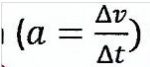
In the run-up, controlled horizontal velocity is important to set the jumper up towards the acceleration into the jump and the jump itself. The acceleration equation Formule 1  with a the acceleration and v the horizontal velocity over time (t) applies.
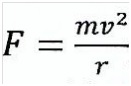
In the second phase, the centrifugal force (F) is crucial. Defined as Formule 2 , where v is again the horizontal velocity (r the radius of trajectory and m the athlete’s mass), an increase in horizontal velocity will directly have a positive impact on the angular momentum. 
The jumper’s centre of mass path through the air follows a parabolic trajectory towards the clearance of the bar (third phase)   This path is velocity dependant, and characterized by a constant horizontal velocity (obtained through the approach run) and constant downward acceleration (due to gravity).[ii],[iii] The standard projectile motion equation from Newtonian mechanics provides insight into the relationship between these elements towards optimal height: Formule 3  ,[iv] where y0 is the distance that the athletes centre of mass is from the ground, Vi is the initial velocity prior to the jump. This velocity is determined by both the horizontal velocity obtained through phases 1 and 2 of the jump, and the vertical velocity before the jump
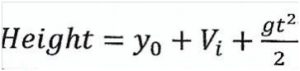
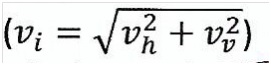
Formule 4 g is the gravitational forces, t is the time
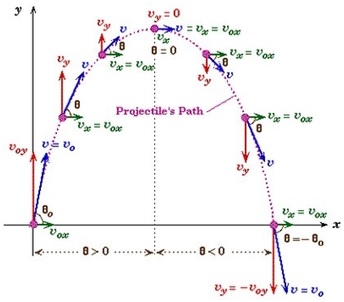
 Foto 3 Deel I

Figure: Parabolic flightpath of a high jumper

Thus, the horizontal velocity at plant will influence the vertical velocity and therefore the height reached in the jump.

The case for power (force)

All of Newton’s laws of motion applies to high jump. In the approach (phases 1 and 2), overcoming inertia (Newton’s 1st law), then accelerating towards the bar (2nd law), and lastly during the plant (3rd law – for every force there is an equal in quantity but opposite in direction), force is required.

Combining Newton’s 2nd law of motion (F=ma, F=force in direction of acceleration and m the athlete’s mass) equation with the momentum equation, results in Formule 6. Thus, force is redefined as the rate at which the momentum is change (the angular momentum).
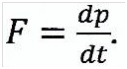
Furthermore, the rate of change in momentum is directly proportional to the resultant force applied with movement being in the direction of this force.

Thus, the force applied at plant will influence the vertical velocity and therefor, as previously with speed, the height reached in the jump.

A balancing act

For an optimal jump, a balance needs to be achieved between force impartation over the greatest range of motion. This needs to be achieved over the least amount of time (thus highest velocity) at the time of plant.

Furthermore, the jumper can only influence the momentum and parabolic trajectory up to the point of plant. The velocity of the approach, and the steepness of the launching angle will contribute to the parabola of flight. Once off the ground, the centre of mass’s parabolic curve (including its angle as well as velocity) is unchangeable.

The posture of the athlete at plant will thus influence the amount of force and velocity that are transferred into the jump, as well as the parabolic trajectory. With a deeper knee bend at plant, more force can be applied. Whilst with less flexion in the knee, as well as less time spend on plant, an increased amount of horizontal velocity can be maintained and transferred to generate the vertical lift.[v]

Individual make-up and identification of the different types of jumpers

Jumpers can thus manipulate these variables towards gaining height. Based on the individual make-up of your jumper, the relative contribution of these variables will differ.  This difference have contributed to the sub-categorization of jumpers into two distinct categories:  speed and power jumpers.

So how can these jumpers be identified? To answer this question, it is necessary to look at their genetic and central nervous system tendencies, including body type:
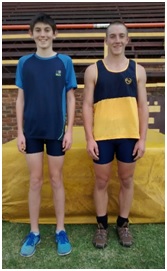
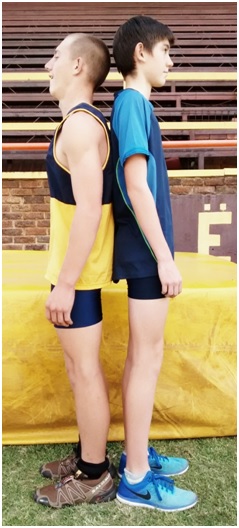
Foto 1 Deel I          Foto 2 Deel I

Figure B: Edric (13yrs) and Pieter (15yrs) displaying the Ecto- and Mesomorph body types[vi], [vii] 

Speed jumpers

Speed jumpers are typically those gifted in the structural department, with long legs and Achilles tendons, small joints and a low body fat percentage. As a typical ectomorph, they might find it difficult to build muscle – and thus to influence the power variable in their jump considerably. These jumpers usually rely on their reactive ability (elastic strength), and naturally favours the least amount of time at plant.

In the approach, they by and large run with tall hips and good mechanics (if that skill has been acquired). Their last step toward take-off will typically be with little knee bend (and lowering of the centre of mass) to allow for the rapid take-off contact. They use their ankles and hips well in the last portion of the bar clearance by extending their ankles and hips completely and quickly.  They are the hip dominant jumpers with strong ankles to allow for the short amortization phase (the time spend changing direction as you are on the ground just before a very fast take-off).

Another way to identify this type of athlete will be by looking at his/her other events, as they typically excel in sprints, long jump or hurdling.

Power jumpers

Power jumpers are generally naturally stronger in the lower body, with thicker muscles and joints. Leaning more to the mesomorph body type,iv,v these athletes typically have high metabolisms, can build muscle easily due to responsive muscle cells but can also gain fat easier than their ectomorph counterparts. With their natural power, they favour a larger degree of range of motion at the plant in order to apply their absolute strength and explosive power.  This is evident in a deeper knee bend before take-off.

It is worth noting that body types and its tendencies aren’t set in stone, and many talented jumpers are a combination of the ectomorph/mesomorph body types,vii and may display a combination of the factors presented above based on their unique characteristics.

Considering the exceptions

Strength as a physical characteristic is best developed after puberty. Woman – with higher percentage of elasticity than strength[viii] – and youth will thus typically favour the velocity take-off mechanisms.

In Conclusion

Both velocity and force are important variables in high jump, and the athlete who is best equipped to apply most force in the shortest period of time will jump the highest. The relative contribution of these variables towards an optimal jump will vary between jumpers, and needs to be considered in athlete development.

The speed jumper is your typical hip dominant jumpers who will rely on their velocity and ectomorph build to gain jumping height. The power jumper on the other hand, with their higher natural strength level and potential lesser speed, are knee dominant and will apply that force in the jump.

References

[i] Smith, Joel. “7 Philosophies on Increasing Vertical Jump Skill and Power”, Freelap, https://www.freelapusa.com/7-philosophies-on-increasing-vertical-jump-skill-and-power/, viewed 8 March 2017

[ii] Stone, Glen. “Projectiles”, High Jump Coach, High Jump On-line book, http://www.highjumpcoach.com/HJCbook/Phy/Proj, viewed 13 March 2017

[iii] Mohan, Rajagopalan. “Dev Blog: Designing a Jump”, AtomJack, August 11, 2014, http://www.atomjack.net/blog/2014/12/9/dev-blog-designing-a-jump, viewed 13 March 2017

[iv] Cooke, Paige. “High Jump Analysis”, Undergraduate Journal of Mathematical Modelling: One+Two, Volume 5, 2012 Fall, Issue 1, Article 4, http://scholarcommons.usf.edu/cgi/viewcontent.cgi?article=4849&context=ujmm, viewed 13 March 2017

[v] Dick, Frank W. ‘High Jump”, 8th edition, 1980

[vi] Snape, Joel. “Ectomorph, Endomorph and mesomorph: How to train for your body type”, Coach, 21 December 2016,

http://www.coachmag.co.uk/lifestyle/4511/ectomorph-endomorph-or-mesomorph-what-is-your-body-type, viewed 13 March 2017

[vii] Your Body Type – Ectomorph, Mesomorph or Endomorph?”, MS, https://www.muscleandstrength.com/articles/body-types-ectomorph-mesomorph-endomorph.html, viewed 13 March 2017

[viii] Dick, Frank W. ‘High Jump”, 9th edition, 1993


Mike Powell on Long Jump technique


Mike Powell shared his thoughts on long jumping technique at the 2008 Michigan Interscholastic Track Coaches Association (MITCA) seminar. In 1991, Powell broke Bob Beamon’s long-standing world long jump record with a leap measuring 8.95 meters (29 feet, 4 1/2 inches). Updated January 17, 2017.

Long Jump Technique – Start

Powell: I try to have my athletes have a walk-in or a run-in start, or if they want to do a standing start, then just make sure they have another check mark, either the first step out or, really, the first cycle – the second step out.

Long Jump Tips – Overall Approach

Powell: I used a 20-stride approach – or a 10-cycle approach (a cycle being, just counting one foot).

Most of the time I try to (teach jumpers) to start off with their jump foot, but some people have got to start off with their right (foot). That’s why cycles are good, because a 19-step approach is the same thing as a 20-step approach. It’s still 10 cycles.

I would recommend for most of your high school athletes that you start them out with an eight-cycle, or 16-step, approach. … Obviously you might have some great athletes, women or men (who can handle a longer approach). So if you take them to a 20-step approach, it would be three cycles in the drive phase, three cycles in the transition phase, two cycles in the attack phase and two cycles in the takeoff phase.

For the eight-cycle approach it would be two cycles in the drive phase, two cycles in the transition phase, two cycles in the attack phase and then the takeoff is always the same, there are four steps.

Long Jump Technique – Drive Phase

Powell: The first part of the run is the drive phase. Similar to the way that athletes are when they’re running a sprint. The difference is, in the sprint, you come out of the blocks. But in the drive phase of the run you’re pushing, picking up your foot and pushing back. … When you’re driving, your head is down, you’re not so much of a low angle when you’re running, but you are pushing back, picking up the foot and pushing back, with the head down and driving the arms high … to make sure that you’re not falling, that you’re keeping your balance.

Long Jump Technique – Transition Phase

Powell: The second part of the approach is the transition. Transition is a really important part because you’re going from that driving phase to the attack phase, or the sprint phase. Now the same thing as in the sprints, take your time coming up. On the runway there’s not much time. For me, I had six steps in my drive phase and six steps in my transition phase.

In the transition phase, wherever your head goes, that’s where your hips are going to go. … So when an athlete leaves the ground, if they’re looking down, they’re going down. If the head’s going up, they’re going to go up. What we want to do for that transition phase is take them from that down position, to an upward position where they can sprint. The best way to get them to do that is just to think about taking their head up slowly. As coaches, we just throw out a million things until something sticks and they get it.

What I try to do with my athletes is, I try to tell them, ‘Think of your run, the transition phase, as if you were looking at the numbers on a clock.’ So for me, my transition phase was three cycles, so I knew that I would count three lefts. So if (at the start of) my drive phase my head was down, I was at six o’clock. Then in the first cycle on my transition phase I went to five o’clock. Then to four o’clock – head coming up. And then to three o’clock … come up nice and smooth. Also, I would tell my athletes, Look down the runway, look at the board, then look at the pit. And then come up looking at the horizon.

Long Jump Technique – Attack Phase

Powell: I would always think about trying to go up … that means you have to get tall and bouncy and go up, thinking up. Everything is always up. Light and quick on their feet. The attack phase typically should always be two cycles, four steps. It doesn’t take very long to get to your speed when you do it the right way. It’s a different type of running than in the transition (phase). The attack is a different type of running, so they can put that full effort into each part without using so much energy. The trick is to do all those things correctly down the runway to get to the takeoff, and that’s the big payoff.

Long Jump Technique – Takeoff

Powell: You want to bring your speed to the board, and hopefully to your penultimate step (the next-to-last step). To get your athlete to go vertical … you want to have them coming in with the highest position. On the next-to-last step you’re going to go down from the highest position to a flat foot – it’s a long step. Then the next step is a short step. You take your hips from (a high) position to a lower position. That short step takes the takeoff angle and your hips are now facing up. That creates the situation where the athlete doesn’t have to try to jump. The biomechanics allow them to get off the ground.

At the lower levels, just have them think about making the last two steps really quick. Basically what that means is, they’re not going to reach. They’re going to carry their speed into the board. The second tier athletes, we’ll tell them to go to that flat foot on the penultimate step and try to have a long-step, short-step. Long step is a flat foot.

Aftrap

At the higher levels, especially a really, really talented kid who’s also smart, that can handle it, you can break it down further. One of the main reasons why I was able to jump as far as I did was because I was able to take my speed into the takeoff. And what I did, what I call the push- pull-plant, going into the penultimate step – you go to a flat foot, you’re going to lose speed, because you spend more time on the ground – but what you want to try and do is limit how much speed you lose. So you push into that penultimate step.

The pull comes from the pulling action from over the top of that flat foot. It’s like a fixed lever. Just before the foot hits the ground it’s pulling back. It’s rolling from the heel to the toe. Pulling that way.

The next part will be the plant. The plant is not a high heel recovery, it’s a low heel recovery to a flat foot, and then a punch. That’s what gets you off the ground. Punch the elbow back (using the opposite arm), punching the knee, shrugging the shoulders, lifting up the chin. Everything going up. So when they hit the board at ground contact the shoulders are behind the foot. But when they take off, they’re over the top foot. Hips high. Good speed. Force into the ground. That’s what makes for (long) jumps.”

Long Jump Tips – Flight and Landing

Powell: Once it leaves the ground the natural tendency for the body (is) to flip. … So what you want to do is block and fight that forward rotation. Lengthen the body out, block the arms, keep the body elongated as long as possible before landing. … So you want to make sure that you’re hitting (the board) behind the foot and then taking off over the top of the foot, and everything going up.

Keep your body upright, get yourself into a position when you come into the landing, where you’re not bending over, but assume a position where you can lift up the knees, extend the heels, hit the sand with the heels and pull to the side to make sure that the butt is clearing the heels, or the European way, where they hit and pull and scoop through.

Landing Hang


Source: trackandfield.about.com

Preparation by Rudolph Cloete


Die Vastrap/Aftrap in die Verspring


Die Vastrap/Aftrap in Verspring

deur Zonk van Rooyen, VSAAV Vlak III

Inleiding

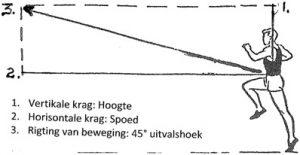
Die vastrap en aftrap is baie belangrike komponente van Verspring. Die atleet moet sy horisontale aanloopspoed effektief in vertikale hoogte kan omskakel. Hoe beter die atleet hom-/haarself voorentoe en vertikaal op in die lug in kan kry, hoe verder sal daar in die verspringput geland word.

Maar altwee kan nie teen 100% uitgevoer word nie: daarom sal die aanloopspoed in die laaste 2 treë voor die vastrap na 94% verminder. Die uitvalshoek sal ook nie ‘n 90° hoek met die grond kan wees nie: in die praktyk sal dit nader aan 45° wees!

Kragte by aftrap

Voorbereiding vir die vastrap

Om ‘n goeie aftrap te kry, moet die atleet ‘n biomeganiese beginsel toepas: die atleet moet sy swaartepunt laer kry – amper soos om ‘n veer in te druk sodat dit ‘n drukkrag kan uitoefen wanneer dit losgelaat word.

Om die effek te verkry moet die tweede laaste treë voor die vastrapplank effens langer wees as die voorafgaande hardlooptreë. Dit sal die atleet se swaartepunt laat sak. Dit word die sprongvoorbereidingsfase/ “gather” genoem. Die proses moet nie oorbeklemtoon word nie, want dan sal die bolyf voorentoe buig en dit sal weer negatief op die sprong inwerk.

Die Vastrap

As die tweede laaste treë langer as normal moet wees, moet die laaste treë [die een waar die vastrapvoet op die plank geplaas word] korter, vinniger en kragtig wees. Die vertikale swaartepunt van die atleet sal nou net-net agter die vastrapvoet wees.

Die vastrapvoet moet in die middel van die plank geplaas word. Die voet moet reguit na voor wys: Indien dit na links of reg wys, sal die vlugpatroon skeef wees en ‘n swak balans in die vlug veroorsaak. Die bolyf lê effens terug en die kop is in die neutrale posisie, met die oë wat in die verte staar.

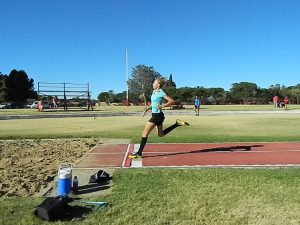
Nou vind daar ‘n hak-toon rolbeweging plaas…alhoewel die atleet ‘n platvoetige gevoel ervaar, sal die hak die plank eerste tref. Nou rol die voet oor die bal na die tone, wat gestrek die laaste is wat die plank gaan verlaat.DSCN3573

Die Aftrap

Nou beweeg die lyf [gedurende genoemde hak-toon rolbeweging] oor die vastrapvoet. Bolyf en kop is nog steeds in die neutrale posisie.

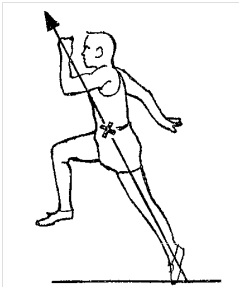
Die klem val nou op die sogenaamde “vrybeen”[as die atleet met sy regtervoet vastrap, sal dit die linkerbeen wees!] Die vrybeen beweeg nou gebuig deur die vertikale lyn en word aan die anderkant kragtig [nog steeds gebuig] opgeruk.

Die ideale eindposisie van die vrybeen is dat dit ‘n 90° hoek met die heupe en bolyf moet vorm.

Nou kry ons weer ‘n biomeganiese beginsel, nl. aksie/reaksie: Hoe kragtiger die vrybeen opgeswaai word (aksie), hoe kragtiger dryf die landingsvoet en -been (reaksie) teen die vastrapplank. Dit is die krag wat nodig is om die atleet van die grond af te dryf – die lug in! Die atleet spring dus eintlik met sy vrybeen!

Die arms sinkroniseer met die voete/bene: Die vrybeen se ooreenstemmende arm [m.a.w. regterarm] swaai saam met die been kragtig op – gebuig in die elmboog, om die 90° van die been na te boots. Die hand beweeg tot op ooghoogte. Die linkerarm word na agter geswaai om sodoende die ewewig te bewerkstellig.

Wanneer die atleet die plank verlaat, is die kop in die neutrale posisie, die bors hooggehou en die vastrapbeen en voet ten volle gestrek!

Aftrap 2

Nou is alles reg vir ‘n volmaakte paraboliese vlug!


Hoogspring vir beginners


Hoogspring vir beginners

geskryf deur Yolandi Grundlingh: VSAAV Vlak III

Hoogspring kan een van die moeilikste atletiekitems wees waaraan ‘n leerder kan deelneem. As ‘n leerder nie van die begin af reg geleer word nie, kan die leerder belangstelling verloor of selfs bang raak om oor die lat te spring.

Die belangrikste vaardigheid wat ‘n leerder ooit sal aanleer, is om skoon oor die lat te spring sonder twyfel of vrees dat die lat hom/haar gaan seermaak. Soos wat die leerder hierdie vaardighede bemeester, sal die lat hoër opgeskyf word en sal hy/sy meer selfvertroue kry om te spring.

Die vraag is… Hoe kry ons die leerder om oor die lat te spring? In hierdie artikel gaan ek kortliks ‘n paar stappe bespreek wat afrigters gaan help om hul beginners te leer spring.

STAP 1 – Bepaal die been waarmee die leerder gaan spring. (Vastrapvoet)

Om te bepaal watter been dit is, laat die leerders met een been na jou toe spring. Die leerder sal met die dominante been spring. As die leerder met die regterbeen spring, hardloop hy/sy van die linkerkant af. As die leerder met die linkerbeen spring, hardloop hy/sy van die regterkant af.

STAP 2 – Agteroor val (“backflops”)

Laat die leerders nou met hul rûe na die mat toe staan en laat hulle net agteroor val tot op die mat. Moet nog nie die lat oor die pale laat rus nie sodat die leerders eers gewoont raak om net agteroor te val. Wanneer die leerders daaraan gewoont is, kan ‘n tou tussen die twee pale gepan word. Nie te hoog nie. Maak die leerders nou attent daarop om hul knieë te buig en hul arms te gebruik wanneer hulle die “backflop” doen. Dit sal help met hoogte wanneer die leerder oor die tou val.


artikel1

STAP 3 – 180 grade sprong (“Jump and turn”)

Hierdie sprong leer die leerders om te draai in hul sprong sodat hul op hul rug kan val. Dit werk as volg:

  • Leerder met regter dominante been plaas linkerbeen voor.
  • Gee drie stappe voorentoe.
  • Leerder gebruik regterbeen om op te spring.
  • Bring linkerbeen op na bors en gebruik arms om 180 grade draai in momentum te kry.
  • Leerder land op sy/haar voete maar kyk na die teenoorgestelde kant.

Oefen dit todat leerders dit regkry.

artikel2 

STAP 4 – 1-2-3 spring

Hierdie sprong is ‘n kombinasie van STAP 3 en 4.

  • Leerder gee drie tree na die mat. (Plaas nie dominante been voor en begin dan hardloop.)
  • Spring met dominante been.
  • Bring nie-dominante been op na bors en gebruik arms om 180 grade draai in momentum te kry.
  • Val oor op rug.

Maak ook hier gebruik van ‘n tou in plaas van die lat. Leerders kan geleidelik gewoont gemaak word aan die lat.

artikel3 

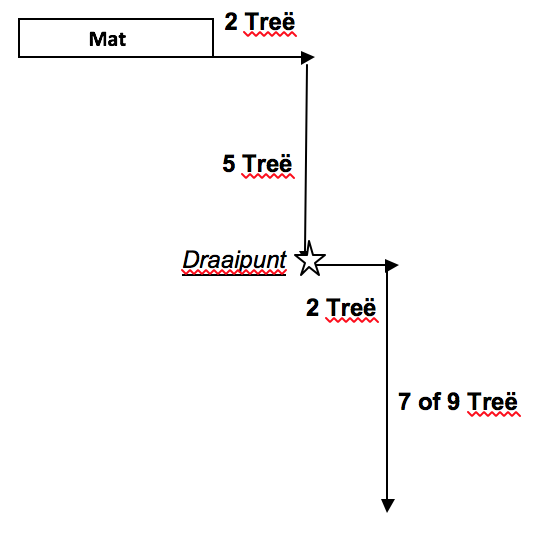
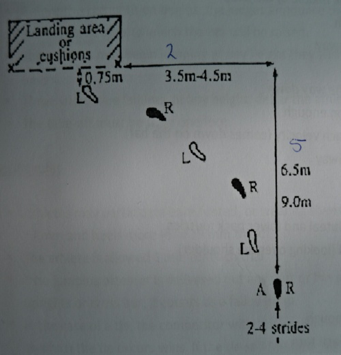
STAP 5 – Meet treë uit vir die aanloop.

Hierdie is die laaste stap en die leerder moet van hier af begin leer hoe om volledig te hardloop en te spring. Meet die aanloop as volg uit.

stappe

artikel4

Wanneer die leerder gewoont is aan die sprong kan hy/sy attent gemaak word op die volgende om sy/haar sprong te verbeter.

  • Die vastrapvoet wys skuins na die mat toe wanneer vasgetrap word.
  • Maak die rug hol en druk die kop agteroor om ekstra hoogte te kry.
  • Bring die nie dominante knie hoog op en gebruik die arms om draaimomentum te kry.
  • Hardloop op jou tone, nie platvoet nie.

spronge

artikel6

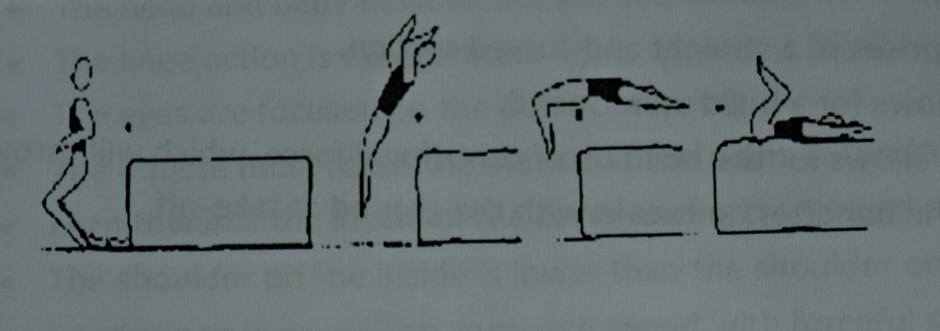
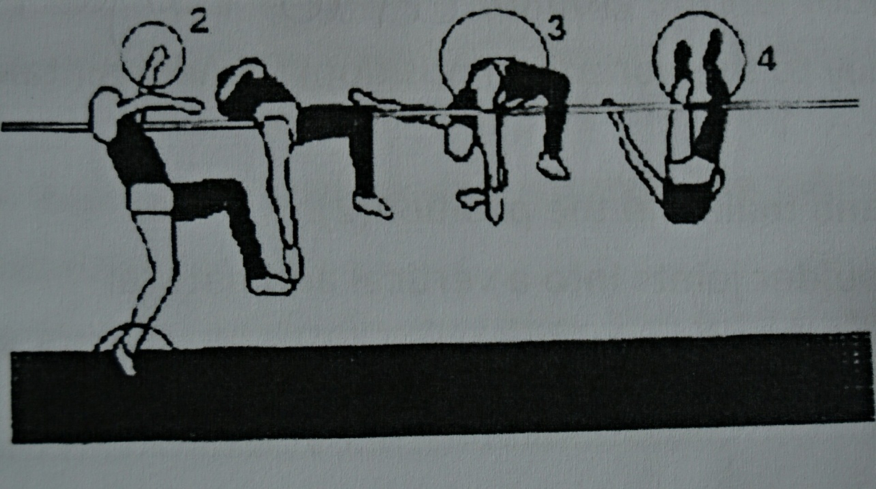
Let op na die arm by no.2

Kyk hoe mooi buig die atleet oor die lat by no.3

Let op na die posisie van die voete by no4 sodat die bene en voete nie die lat afstamp nie.


Die aanloop in die Verspring


deur Rudolph Cloete, ASA en VSAAV Vlak III

Al hoe meer verspringafrigters besef nou dat die aanloop die belangrikste deel van die verspringpoging is – en dat hierdie fase (en sy oefenkomponente van spoed en krag die meeste oefentyd moet kry! Die rede hiervoor is dat, as alle dinge gelyk is, die vinnigste atleet gewoonlik die verste sprong sal uitvoer.

Maar die aanloop kan ook veroorsaak dat die atleet wat die verste kan spring, nie op daardie dag die kampioen word nie! ‘n Onakkurate aanloop, waar die atlete te ver voor die vastrapstreep vastrap en/of aanhoudend oortrap kan ‘n verspringer se moed breek!

  1. Die begin van die aanloop:

Daar is 3 maniere om die aanloop te begin, nl.

i) Staande met voete een voor die ander op die beginmerk.

ii) Staande met voete bymekaar

iii) Inloop na die beginmerk toe.

Die afrigter moet daardie metode, wat sy/haar atleet se aanloop die noukeurigste maak, kies. “Noukeurig” hier beteken: daardie begin wat konstant sorg dat die atleet reg op die plank vastrap.

Metode i) is vir die beginner! Die atleet staan met sy vastrap agter sodat die afrigter elke keer weet met watter voet hy/sy vastrap… onthou die afrigter staan ver van die atleet en kan/moet nie elke keer vir die atleet skree “Met watter voet trap jy vas” nie!

  1. Lengte van die aanloop:

Die doel van die aanloop is sodat  die verspringer sy maksimum-hanteerbare spoed net voor die vastrapplank kan bereik!

Lang, lenige atlete se aanloop sal noodwendig langer (in meter) wees as kort, bonkige atlete. Hoe vinniger ‘n atleet, hoe langer (in meter) sal sy aanloop wees. MAAR die aantal hardlooptreë kan presies dieselfde wees en korreleer gewoonlik goed met die ouderdom , + of – 1, van die atleet!

Dus sal ‘n Onder 10-atleet [wat met sy vastrapvoet agter staan!] se aanloop 11 hardlooppasse wees EN ‘n Onder 17-atleet sal 17 passe hardloop!

Nadat die afrigter die atleet se hoeveelheid hardlooptreë bepaal het, bly dit die hele seisoen dieselfde – maar die meterafstand kan verskil na gelang van spoedverbetering gedurende die seisoen en/of oppervlakte van aanloop en/of weersomstandighede.

  1. Kompetisie-aanloop

Meet die afstand en maak dit die verwysingsafstand wanneer die atleet na ‘n kompetisie toe gaan! Daar meet die atleet sy afstand uit en hardloop in die rigting van die plank. Nou moet die afrigters slegs ‘n geringe verstelling, van voorentoe of agtertoe skuif, maak!

Die atleet moet verkieslik nooit sy/haar aanloop op ‘n kompetisie uithardloop nie, want dit beteken hy/sy moet in twee verskillende  rigtings hardloop! EN as die wind waai, gaan die atleet nooit, met die terugkomslag, die plank raaktrap nie!

As die aanloop onkonstant bly, kan ‘n kontrolemerk by die eerste treë na die wegspring geplaas word – dit los gewoonlik 90% van die problem op!

  1. Fases in die aanloop

Die eerste fase is die versnellingsfase, m.a.w. van die stilstaande totdat die atleet “sy spoed” bereik. Die fase moet baie geoefen word, want dit moet altyd dieselfde wees.

Die tweede fase is die ontspanningsfase, m.a.w. tot net voor die laaste 3 treë voor die vastrapplank. Die atleet mag nie hier spoed verloor nie, maar moet sy liggaamshouding regkry vir die vastrap en aftrap.

In die derde fase, word die tweede laaste tree langer gemaak – dit sal die swaartepunt laat sak! Dit is die sogenaamde “gather”! Die laaste tree is nou korter, wat veroorsaak dat die swaartepunt direk agter die vastrapvoet inskuif.

Bibliografie

  1. Jonath, U., Haag, E., Krempel, R., Atletiek.(Vertaal uit Duits).1977
  2. Preller, Kaai. Handleiding vir Verspring en Driesprong. 1981