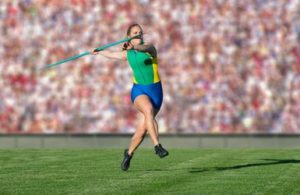
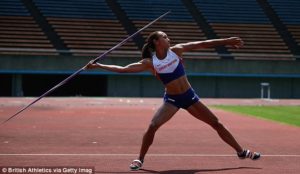
Mike Powell on Long Jump technique


Mike Powell shared his thoughts on long jumping technique at the 2008 Michigan Interscholastic Track Coaches Association (MITCA) seminar. In 1991, Powell broke Bob Beamon’s long-standing world long jump record with a leap measuring 8.95 meters (29 feet, 4 1/2 inches). Updated January 17, 2017.

Long Jump Technique – Start

Powell: I try to have my athletes have a walk-in or a run-in start, or if they want to do a standing start, then just make sure they have another check mark, either the first step out or, really, the first cycle – the second step out.

Long Jump Tips – Overall Approach

Powell: I used a 20-stride approach – or a 10-cycle approach (a cycle being, just counting one foot).

Most of the time I try to (teach jumpers) to start off with their jump foot, but some people have got to start off with their right (foot). That’s why cycles are good, because a 19-step approach is the same thing as a 20-step approach. It’s still 10 cycles.

I would recommend for most of your high school athletes that you start them out with an eight-cycle, or 16-step, approach. … Obviously you might have some great athletes, women or men (who can handle a longer approach). So if you take them to a 20-step approach, it would be three cycles in the drive phase, three cycles in the transition phase, two cycles in the attack phase and two cycles in the takeoff phase.

For the eight-cycle approach it would be two cycles in the drive phase, two cycles in the transition phase, two cycles in the attack phase and then the takeoff is always the same, there are four steps.

Long Jump Technique – Drive Phase

Powell: The first part of the run is the drive phase. Similar to the way that athletes are when they’re running a sprint. The difference is, in the sprint, you come out of the blocks. But in the drive phase of the run you’re pushing, picking up your foot and pushing back. … When you’re driving, your head is down, you’re not so much of a low angle when you’re running, but you are pushing back, picking up the foot and pushing back, with the head down and driving the arms high … to make sure that you’re not falling, that you’re keeping your balance.

Long Jump Technique – Transition Phase

Powell: The second part of the approach is the transition. Transition is a really important part because you’re going from that driving phase to the attack phase, or the sprint phase. Now the same thing as in the sprints, take your time coming up. On the runway there’s not much time. For me, I had six steps in my drive phase and six steps in my transition phase.

In the transition phase, wherever your head goes, that’s where your hips are going to go. … So when an athlete leaves the ground, if they’re looking down, they’re going down. If the head’s going up, they’re going to go up. What we want to do for that transition phase is take them from that down position, to an upward position where they can sprint. The best way to get them to do that is just to think about taking their head up slowly. As coaches, we just throw out a million things until something sticks and they get it.

What I try to do with my athletes is, I try to tell them, ‘Think of your run, the transition phase, as if you were looking at the numbers on a clock.’ So for me, my transition phase was three cycles, so I knew that I would count three lefts. So if (at the start of) my drive phase my head was down, I was at six o’clock. Then in the first cycle on my transition phase I went to five o’clock. Then to four o’clock – head coming up. And then to three o’clock … come up nice and smooth. Also, I would tell my athletes, Look down the runway, look at the board, then look at the pit. And then come up looking at the horizon.

Long Jump Technique – Attack Phase

Powell: I would always think about trying to go up … that means you have to get tall and bouncy and go up, thinking up. Everything is always up. Light and quick on their feet. The attack phase typically should always be two cycles, four steps. It doesn’t take very long to get to your speed when you do it the right way. It’s a different type of running than in the transition (phase). The attack is a different type of running, so they can put that full effort into each part without using so much energy. The trick is to do all those things correctly down the runway to get to the takeoff, and that’s the big payoff.

Long Jump Technique – Takeoff

Powell: You want to bring your speed to the board, and hopefully to your penultimate step (the next-to-last step). To get your athlete to go vertical … you want to have them coming in with the highest position. On the next-to-last step you’re going to go down from the highest position to a flat foot – it’s a long step. Then the next step is a short step. You take your hips from (a high) position to a lower position. That short step takes the takeoff angle and your hips are now facing up. That creates the situation where the athlete doesn’t have to try to jump. The biomechanics allow them to get off the ground.

At the lower levels, just have them think about making the last two steps really quick. Basically what that means is, they’re not going to reach. They’re going to carry their speed into the board. The second tier athletes, we’ll tell them to go to that flat foot on the penultimate step and try to have a long-step, short-step. Long step is a flat foot.

Aftrap

At the higher levels, especially a really, really talented kid who’s also smart, that can handle it, you can break it down further. One of the main reasons why I was able to jump as far as I did was because I was able to take my speed into the takeoff. And what I did, what I call the push- pull-plant, going into the penultimate step – you go to a flat foot, you’re going to lose speed, because you spend more time on the ground – but what you want to try and do is limit how much speed you lose. So you push into that penultimate step.

The pull comes from the pulling action from over the top of that flat foot. It’s like a fixed lever. Just before the foot hits the ground it’s pulling back. It’s rolling from the heel to the toe. Pulling that way.

The next part will be the plant. The plant is not a high heel recovery, it’s a low heel recovery to a flat foot, and then a punch. That’s what gets you off the ground. Punch the elbow back (using the opposite arm), punching the knee, shrugging the shoulders, lifting up the chin. Everything going up. So when they hit the board at ground contact the shoulders are behind the foot. But when they take off, they’re over the top foot. Hips high. Good speed. Force into the ground. That’s what makes for (long) jumps.”

Long Jump Tips – Flight and Landing

Powell: Once it leaves the ground the natural tendency for the body (is) to flip. … So what you want to do is block and fight that forward rotation. Lengthen the body out, block the arms, keep the body elongated as long as possible before landing. … So you want to make sure that you’re hitting (the board) behind the foot and then taking off over the top of the foot, and everything going up.

Keep your body upright, get yourself into a position when you come into the landing, where you’re not bending over, but assume a position where you can lift up the knees, extend the heels, hit the sand with the heels and pull to the side to make sure that the butt is clearing the heels, or the European way, where they hit and pull and scoop through.

Landing Hang


Source: trackandfield.about.com

Preparation by Rudolph Cloete


Op 21 Januarie sê Rooimier ...


Op 21 Januarie 2017 sê Rooimier dat hierdie die dekade van die Ouerafrigter is.

By elke byeenkoms waar ons as skole kom, sien jy die ouers wat self hul kinders afrig. Dit is opmerklik dat die skoolonderwyser-afrigter al hoe minder betrokke is by atletiekafrigting….en Rooimier het begin nuuskierig raak oor hierdie “nuwe” tendens.

Die maklike antwoord is dat die jonger onderwysers nie meer belangstel nie! Die ouer garde sê maklik “Ag, hulle (die jong onderwyser(es)) stel nie belang nie – hulle is lui.” Tog is daar baie voorbeelde van jong opkomende onderwyser-afrigters in die Vrystaat!

Rooimier is van mening dat die rede vir die verskynsel van Ouerafrigters meer kompleks is – en dat daar is eintlik verskeie faktore is wat saamspan om hierdie tendens te skep:

Eerstens, is daar die soort persoon wat deesdae Onderwys toe kom! Praat jy met die ouergarde, sal baie van hulle vir jou sê dat hulle juis kom skoolhou het omdat die betrokkenheid by buitemuurs hulle gelok het. Daarteenoor, hoor mens al hoe meer dat onderwysers weier om by buitemuurs betrokke te raak – en as die Skoolhoof hulle daaroor aanspreek, dan spring die onderskeie vakbonde vinnig in die Skoolhoof se keelgat af!  Deesdae se onderwysers is vakbondmense, wat ‘n 7 ure dag beding het!

Tweedens, is atletiek vandag ‘n spesialis-sportaktiwiteit. Weg is die dae dat die onderwyser (met ‘n bietjie kennis) ‘n goeie atleet kan help ontwikkel en laat vorder tot op nasionale vlak. Die standaard van atletiek vereis gespesialiseerde kennis en baie ervaring van die afrigter. Komponente soos pleometriese kragontwikkeling, energiebronne, dieët, dubbelpiekprogrammering, motivering, ens vereis dat ‘n afrigter aanhoudend iets nuut moet aanleer en sodoende ‘n lewenslange student van sy item moet bly.

Dit is dan veral laasgenoemde wat die teelaarde vir die professionele afrigter geskep het. Veral die townshipskole se leerders, wat sou belangstel in atletiek, soek hul heil by klubs. Die skool help nie meer nie, daarom gaan soek hulle hulp by die professionele afrigter.

En laaste, maar nie die minste nie, is die ontvolking van die platteland … en Rooimier sien dit veral in die Vrystaat. Dit is nie die groot, bekende stadskole wat jaarlikse na die VSAAV se afrigtingskursus in Desembermaand kom nie! Die oorgrote meerderheid kom van die kleiner, plattelandse skool – en dan veral die ouer en sy begaafde kind – van die kleiner, plattelandse skool. Want mens moet nie dink omdat die skole in bv. die Suid-Vrystaatse dorpies agteruit (of toegemaak het) gegaan het, dat die plattelandse kind sy/haar talent skielik verloor het nie!

…en daardie kind se enigste redder is sy ouers, wat altyd hul beste vir hul kind sal probeer gee. Rooimier salueer vandag die ouer wat self sy moue opgerol het om sy kind na hoër hoogtes te neem …of net sy hand in sy sak gesteek het om sy kind na ‘n professionele afrigter aan te ry!

Vir hulle wil Rooimier sê: Die VSAAV is tot u beskikking. Hier is ‘n Vereniging wat u dilemma verstaan. Gaan gerus na http://vsaav.co.za en kyk hoe kan en wil hierdie onderwyserafrigters u help d.m.v. klinieke, kursusse en berigte oor afrigting.


Javelin for beginners


In some areas of the U.S., or of the world, a new thrower may be introduced to the javelin at a young age. In other places, throwers may not have a chance to toss the spear until they’re young adults. In the U.S., for example, most states don’t even include a javelin throwing event in their state championship meets. As with most throwing events, the younger you’re introduced to the javelin, the lighter the implement that you’ll toss. Both boys and girls may begin with a 300-gram javelin, then work their way up to 600 grams, which is the international standard for women’s competitions. Older boys will advance to the 800-gram male standard.

The first thing some throwers must learn is that the javelin is thrown with the entire body. The overhand delivery may remind many athletes of baseball or football throwing, but those techniques won’t work when you’re throwing the javelin. Indeed, some coaches feel that strong-armed baseball and football throwers don’t make good javelin competitors, because the motions are so different.

As with other track and field throwing events, javelin throwers must combine speed with positioning, accelerating down the runway at high speed, then placing their bodies in just the right position to make the strongest possible throw.

Safety:

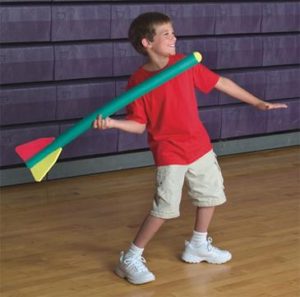
The javelin competition evolved from spear hunting several thousand years ago. Today’s javelin isn’t designed to kill anything, but its sharp point is obviously still dangerous. For that reason, younger athletes will often begin with rubber-tipped javelins to avoid injuries and calm nervous parents. Whether the javelins are rubber- or metal-tipped, coaches and meet officials must be vigilant to keep everyone far from the landing area when younger competitors are throwing, because their aim is more likely to be off.

Foto 01

The throwers’ health is another safety concern. Javelin throwing is very taxing on the body, so young athletes should learn proper warm-up and stretching routines. Additionally, growing athletes will likely perform many drills that deal with separate aspects of the throw, in part to limit the number of full throws they perform.

Grip:

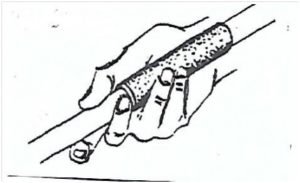
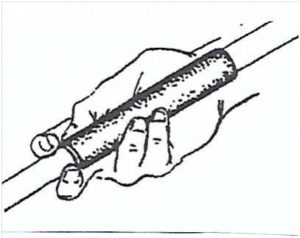
There are three different javelin-throwing grips, with no consensus about which is best, or about which grip is easier for novice throwers. A coach may teach the grip he thinks is best, such as the American style, in which the thrower grips the javelin’s cord between the thumb and index finger; the Finnish style, in which the cord is gripped between the thumb and middle fingers; or the Fork style, in which the thrower grasps the cord between the index and middle fingers. The best approach may be to teach all three styles, then let each thrower determine which method feels most comfortable.

Handgreep 1Handgreep 2Handgreep 3

Run-Up:

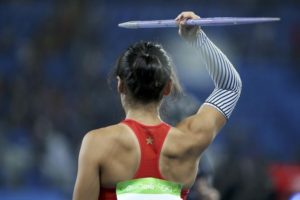
Unlike some other throwing events, new javelin competitors may not begin by throwing the javelin. Instead, they’ll probably start with the run-up. Somewhat like the pole vault, javelin throwers must accelerate down the runway while carrying their implements. New throwers will learn how to hold the javelin high, palm-up, while accelerating gradually during the straight-ahead running phase.

2016 Rio Olympics - Athletics - Preliminary - Women's Javelin Throw Qualifying Round - Groups - Olympic Stadium - Rio de Janeiro, Brazil - 16/08/2016. Lu Huihui (CHN) of China competes. REUTERS/Alessandro Bianchi

Some coaches may even have new throwers walk through the approach first, then jog, before they begin running with the spear. It’s also possible that new throwers will learn the run-up technique without holding a javelin.

Once the young throwers become comfortable with the straight-ahead running phase, they must learn how to transition from standard running to the crossover steps that place their bodies in the proper position for the throw. Again, transition and crossover running drills may be performed at slower speeds, with or without a javelin.

Foto 5


One thing the new thrower won’t learn is the rotational technique, which was banned several decades ago.

Throwing Motion:

The athlete’s first throwing drills may not include a javelin. Instead, competitors may throw a ball that’s several times heavier than a javelin. The first javelin attempts may be standing throws, although some coaches feel that new throwers should always perform drills that include some forward motion plus a follow-through. The javelin thrower will then typically advance to either 3- or 5-step throws. Other drills may focus on throwing after performing the crossover steps, on properly securing the plant foot and on leaning back just before the release.

Foto 06

Source: trackandfield.about.com

Prepared by Rudolph Cloete


Ses basiese beginsels noodsaaklik vir die Gooie


SES BASIESE BIOMEGANIESE BEGINSELS NOODSAAKLIK VIR GOOIE

Deur Wium Mostert.

BEGINSELS 

  1. Alle dele van die liggaam wat gebruik kan word, is betrokke in ‘n gooi.

1.1     Effektiewe tegniek is wanneer die atleet krag kan inspan van die hele liggaam oor die grootste moontlike omvang of afstand.

M.a.w. krag toegepas deur die hele liggaam oor die langste moontlike  tyd. Dit wil sê kragtoepassing oor die langste moontlike tyd waar alle liggaamsdele ‘n aandeel het.

D.w.s.   Werk  =  Krag  x  Afstand

1.2     Alle ander faktore in ag geneem as gelykstaande, kan ons aanneem dat hoe groter die liggaamskrag, hoe groter sal die spoed wees en derhalwe hoe verder sal die gooi wees.

Newton se 2de Wet:       Krag  =  Massa  x  Versnelling

  1. Die gooi-aksie begin vanaf die middel buite toe van groot – stadig – sterk spiere na kleiner – vinniger – swakker spiere.

2.1     In elke gooi-beweging moet elke hefboom in die liggaam op sy beurt die vermoë hê om vinniger in die gegewe rigting van die implement te beweeg.  Hoe vinniger die hefboom, hoe groter die  krag.

2.2     Elke gooi is ‘n som van kragte vanaf die stadiger, sterker spiere na die vinniger, relatief swakker spiere en gewrigte. Dit is noodsaaklik dat daar geen onnodige vertraging in die toepassing toegelaat kan word nie.  Alle kragte moet so gelyk moontlik toegepas kan word.

  1. Krag toegepas word in die rigting van voorgenome beweging.

3.1     In die praktyk in gooi-items is daar egter voorafgaande beweging waarin daar meer dryf as lig (oplig) verkry word, terwyl in die aflewerings meer ligaksie as horisontale dryf benodig word.

Dit is dus noodsaaklik dat die implement op ‘n toepaslike hoek, maar so vinnig moontlik, afgelewer word:

Diskus:       36 – 39°

Gewig:        41°

Spies:           27 – 34°

Hamer:        42 – 44°

  1. Krag word toegepas oor die grootste afstand van beweging. Die atleet span die krag van sy hele liggaam in oor die grootste moontlike afstand.

          Die kragposisie behels dan die volgende hoofpunte:

4.1     Vat die implement/gooi-arm deur die voetplasing so na aanmekaar as moontlik te maak.

4.2     Die wydte van die basis moet groot genoeg wees om ‘n volle frontale gooi te verseker – heupe en skouers na vore.

4.3     Gedurende die kragposisie en deur die afleweringsposisie, bly die romp basies regop.

4.4     Die blokaksie veroorsaak die dramatiese vertraging in spoed van die een kant van die liggaam om die versnelling van die ander kant te bewerkstellig – bv. die linkerkant word geblok en die regterkant (met implement) versnel.

  1. Die liggaamsmassa word verplaas van die regterbeen na die voorbeen.

5.1     Hierdie hoofbeginsel hou direk verband met beginsel 2 – die volgorde van die gooi-aksie – groot na klein spiere.

5.2     Nog ‘n belangrike oorweging is wringing. As die gewig op die agterbeen is, is die skouer semi- gesluit en die heupe is oop.  Hierdie posisie veroorsaak ‘n wringing as die gewig op die agterbeen is.

5.3     Soos die liggaamsgewig na die voorbeen verplaas word, volg die bolyf die meer kragtige  laer deel van die liggaam.  Dit is terselfdetyd ‘n gewigsverplasing/ontwriging. Die Diskusgooi is die beste voorbeeld van hierdie beginsel.

5.4     Soos die liggaamsgewig verplaas word na die voorbeen, blok die voorbeen  –  vertraag die linkerkant en die regterkant van die liggaam (wat die implement vashou) versnel. Sien 4.4.

  1. Die swaartepunt moet reg bokant die basis bly gedurende die kragtoepassing.

6.1     Die korrekte kragposisie bereik dit deur die atleet in die posisie te plaas waar krag effektief toegepas kan word.  As die gewigstoter die linkerbeen t ever uit lyn plaas, is sy swaartepunt nie meer in ‘n geskikte posisie nie. As die voorbeen te stadig is om in posisie te kom, sal die swaartepunt van die basis wegbeweeg.

6.2     Om ‘n wyer radius van rotasie te verkry, sal die geskikte posisie van die swaartepunt die duskusgooier toelaat om sy gooi-arm verder uit te strek …en altwee arms in die hamergooi.


Eienskappe van 'n goeie Afrigter


EIENSKAPPE VAN ‘N GOEIE AFRIGTER

Deur Rudolph Cloete, VSAAV en ASA Vlak III

Verskeie afrigters het al probeer om die goeie afrigter te definieer! Hierdie artikel is ‘n poging om al hierdie eienskappe saam te vat…meet uself maar daaraan!

Kennis van die item

Die goeie afrigter moet ‘n deeglike kennis hê van al die fasette van sy item, soos bv. biomeganika, fisiologie, oefenbeginsels, programmering en die aanleer van vaardighede. Hierdie basiese kennis kan slegs d.m.v. kursusse en simposiums verkry word.

Fotografiese krag van waarneming

Die goeie afrigter kan ‘n beweging/poging waarneem en die foute daarin uitwys. Baie afrigters kan ‘n fout raaksien, maar slegs die goeie afrigter kan die oorsprong en herstel van die fout aanbeveel. Hierdie is ‘n kuns wat slegs deur ervaring en oefening kan ontwikkel.

Geduld

Sukses in atletiek kan slegs bereik word deur ‘n aantal jare se harde werk. Die goeie afrigter weet daar is geen kortpaaie nie en mors ook nie tyd om dit te soek nie.

Entoesiasme

Geen atleet wil ‘n afrigter hê wat self sukkel om te hou van wat hy doen, of wat hy wil hê die atleet moet doen nie. Entoesiasme is aansteeklik en die goeie afrigter sal hierdeur sy atlete beïnvloed om opgewonde te wees oor atletiek en die harde werk wat daarmee saamgaan.

Vermoë om te motiveer

Hy moet instaat wees om belangstelling (by sy atlete) aan te wakker. Hy is altyd sensitief om alle vervelige oefeninge/werk om te skakel na gemotiveerde, positiewe oefen-aktiwiteite.

Hierdie laaste twee gaan hand aan hand: Die entoesiastiese afrigter sal sy atlete maklik kan motiveer om ook die slegte/moeilike werk in die oefenprogram te doen…of om vas te byt in die kompetisie as al die weersomstandighede negatief is!

Toewyding

Die afrigter moet bereid wees om baie vryetyd te bestee in die soeke na goeie atletiese kwaliteite in ander. As die afrigter toewyding toon, sal sy atlete meer geneig wees om ook vas te byt/volharding ten toon te stel.

Ervaring

Die afrigter sal foute maak, dit is menslik en onvermydelik. Die goeie afrigter leer egter uit sy foute en sorg dat hy/sy nie diesefde fout twee keer begaan nie. Dus speel ervaring ‘n groot rol, want nou sal die afrigter diesulke foute by die volgende atleet vooraf kan vermy.

Niemand is onmiddelik ‘n goeie afrigter nie! Hierdie is ‘n sleutelfaktor, want afrigting is ‘n persoonlike verhouding tussen twee individue.

Organiseerder  

Ook moet die afrigter pro-aktief wees in die kompetisie-situasie en altyd die nodige in sy/atleet se sportsak inpak vir net ingeval: merkers vir ‘n aanloop, reënbaadjie/sambreel vir die atleet, ‘n klein handdoek, hoed, maatband, ens.

Die goeie afrigter moet georganiseer wees. Elke oefensessie moet vooruit beplan word om die gewenste uitwerking te hê. Hy moet seker maak dat alle benodighede daar is om die oefening effektief te maak.

Die afrigter moet sekere standaarde vereis

‘n Goeie afrigter vereis stiptelikheid, aanvaarding van beslissings, samewerking tussen atlete, hulpverlening en ondersteuning van/aan spanmaats. Atlete moet ernstig wees oor oefentyd en dit nie mors nie, hulle moet gehoor gee aan dit wat die afrigter gedurende oefeninge vereis en hulle probeer leer.

Die afrigter moet ‘n vertroueling en mentor wees

Almal is dit eens dat afrigting ‘n kuns is wat nie in boeke nageslaan kan word nie! Kennis van die oefenwetenskap is belangrik, interpersoonlike verhoudings is belangrik, maar die goeie afrigter het die kuns bemeester om wenners te kweek!

Die afrigter moet toeganklik wees, MAAR daar moet gewaak word dat familiariteit nie die mooi verhouding tot niet maak nie: in skoolverband is die afrigter die onderwyser/volwassene en die atleet die kind/persoon, wat iets wil bereik. Die regte aanmoediging op die regte tyd en plek kan selfvertroue versterk.

Die goeie afrigter sal ‘n noue verhouding met sy atleet moet hê – dit sal bydra tot albei se sukses! Die afrigter moet saam met die atleet beplan en die atleet moet die afrigter vertrou dat hy/sy weet wat hy/sy doen. Hulle deel nie net die wenglorie nie, maar ook die verloorhartseer! Die wenner het nie die afrigter so nodig nie – die verloorder wel!

Bibliografie

Handboekie by die Nasionale Atletiekafrigterssimposium by die UOVS in Julie 1990 in Bloemfontein.

The ABSA Coaching Journal, Volume 2, May 1999. An ASA development project.


Red Bul! It will give you wiings


RED BULL! It will give you wings

Deur Prof Yoga Coopoo, Phd Board Member,    SA Institute for Drug-Free Sport

Red Bull is one of the latest energy drinks that athletes have flocked to in search of that magic formula to enhance performance. The drink popularized by the Rave culture to party all night long also carries with it an air of intrigue in sport. Athletes who have been selected for drug testing at events have been apt to “declare” Red Bull under the list of “Medications taken”, if it was consumed that day. Recently, at a junior SA Championship, adolescents were witnessed consuming Red Bull in a toilet, as if it were some illicit drink.

So what is the appeal behind this drink?

Red Bull is a non-alcoholic stimulating drink containing:

Taurine, a natural amino acid which is useful for protein synthesis.

Glucuronolactone, a natural substance which eliminates endogenic and exogenic toxins from the body.

Caffeine, a stimulant.

Vitamins, flavourants, glucose an sucrose.

The ingredient of special appeal to athletes is the Caffeine. This substance is on the IOC list of prohibited substances. A concentration greater than 12 micrograms per millilitre of caffeine in                  an urine sample constitutes a doping offence.To achieve this concentration one would have to consume, two to three hours before an urine sample is collected, between…9 – 11 cans of cola, or 2 – 6    cans of Red Bull!!   The caffeine levels would peak within 45 – 60 minutes depending on the individual’s metabolism. The concentration of caffeine in the urine is also dependant on the individual’s weight, metabolic rate and recently digested food in the body.

The potential performance-enhancing effects of this high concentration of caffeine in the urine may be beneficial for individuals engaging in endurance events such as marathon running and road cycling!During these activities caffeine tends to increase utilization of fatty acids for energy and has a “sparing” effect on carbohydrate (primary energy source) utilization, thereby increasing the ability to sustain exercise during these activities.

Documented research has indicated no performance-enhancing benefits of caffeine ingestion for activities involving strength and/or power, such as sprints or events less than 30 seconds.The performance limiting aspect of caffeine ingestion for endurance events is that it stimulates the formation or urine the removal of water from the body. Dehydration is therefore a distinct possibility for the distance runner , which can be compounded when competing in hot and humid conditions.The probable popularity of Red Bull among athletes may be all myths surrounding the ingestion of caffeine and the consequent performance enhancing effects. One should also not discount the allure of the company’s advertising slogan: “Red Bull gives you wiings.”

Bibliography:  The ABSA Couching Journal, Volume 2, An ASA development project, May 1999


Hammer Throw: 13 answers to 13 problems


13 Simple answers to 13 Hard problems in the Hammer Throw

Freely translated from Youri Sedych’s video by Basie Koen

  1. On entry, the low point must be EXACTLY on the middle (0°) line. Low point in front, high point at the back (180°)
  2. Accelerate the hammer on the last swing. Move the ball/hammer head with your arms around you.
  3. ACCELERATE the hammer from the right/left sife through the low (0°) point, actively ‘PUSHING’ the hammer across the low (0°) point, around you, in the throwing direction.
  4. Start the movement of the footwork when the hammer goes through the low (0°) point. Do not go before or after the 0°-line. Depart when the hammer reaches exactly the 0°-line. [Wait for the hammer reaches the 0°-mark]
  5. The turning feet must work TOGETHER with the hammer. When the hammer goes through the 0°-line the feet start turning.
  6. Keep both feet on the ground! Keep turning from the 0°-line to approximately the 110°-mark, pass the 90°!
  7. On completion of the first turn, coming back to the 0°-position, the feet and hips should ‘CLOSE’, thereby establishing/starting the double support phase. Closing the driving foot inwards. Do not end this movement too soon.    Work back to the same position at the start.
  8. During the single support phase (i.e. the second half of the turn) the action is a short, fast one. Spinning on the outside of the ball of the foot.
  9. Always keep the shoulders perpendicular to the hammer with equal pull/puch from both shoulders. [Triangle formed by the shoulders and the     hands] . NEVER PULL WITH THE LEADING SHOULDER. Shoulders on the same line as the hammer. [Hammer, hands, head in line].
  10. Both shoulders should stay “down” and relaxed. NEVER PULL THE SHOULDERS UP.
  11. Touch down with the driving foot will start the double support phase; the hammer should be up towards the high point at 180°. Accelerate hard on the right/left side through the pow (0°) point. [Accelerate on touch down with     the right foot behind the right shoulder] Touch down while the hammer is  still back near the 180°.
  12. With regard to the RHYTHM each turn must become quicker, accelerating (driving) harder and harder each time from the right/left side through the low (0°) point. Pushing the hammer hard with the arms.
  13. The DELIVERY of the hammer must be a natural continuation of the turning. Do not work towards a “finish” (delivery). Throw as if there will      follow another turn. Do not think “delivery”; think about how you turn…not         how you finish!


Op 7 Desember sê Rooimier


Op 7 Desember het Rooimier die volgende te sê …

Ek kom nou net van die opening van die jaarlikse VSAAV- Atletiekafrigterskursus op Sasolburg af!

HTS Sasolburg se skoolsaal was vol atlete, afrigters en ouers, wat almal gekom het om meer kennis en vaardighede te bekom in hul gekose items! Die nie-amptelike getalle wil aandui dat daar baie naby aan 400 mense teenwoordig was ! EN hulle het van ooral oor gekom – ek het Welkom, Hennenman bussie gesien, daar was mense van Kroonstad, Vanderbijlpark en Porchefstroom …! EN ek was bevoorreg om die dame en haar kinders wat al die pad vanaf Zimbabwe gekom het, te ontmoet!

…oud en jonk, wit en swart, lank en kort, stadig en vinnig – hulle was almal daar!

My hart het van trots vinnig geklop toe Spanjool Wessels [Kursusleier] en Vis Janse van Rensburg [Voorsitter: VSAAV] die mense toegespreek het! In die skare het ek Nanda Barnard [uitstaande hoogspringer van die 80’er jare] en Johan Prinsloo [Voorsitter gedurende die USSASA- jare na 1994 en die person wat weer die Vrystaat Hoërskole vroeg in 2000 verenig het!], Henk Janse van Vuuren [huidige Onder-Voorsitter: Vrystaat Hoërskole Atletiekorganisasie] daar opgemerk het.

Op die verhoog het dit geskitter van die legends tot by die jonger afrigters, wat hul tyd, kennis en ervaring vir ‘n paar dae as Hoofafrigters, beskikbaar gestel het:  Tertius Liebenberg [Sunet Viljoen], wat al internasionale symposia toegespreek het; Basie Koen [Chris Harmse] , wat in een jaar meer medaljes op nasionale kampioenskappe bymekaar gemaak het as vele ander afrigters in hul hele afrigtersloopbaan reggekry het; Lee van den Berg[Hoogspring] en Elizna Naude [Diskus] , wat albei self/as atlete nasionale kleure verwerf het; die fluitjieman, Wilfred Sebotsa [Middelafstande] was daar en dan die jonger garde, wie se altlete al op provinsiale en nasionale kampioenskappe presteer het: Elizma du Plessis [Gimnasium], Nelis de Kock [Blouskool], Annie Marais [Parys], Charles van Rooyen [Dagbreek] en Leroux Jordaan [HTS Sasolburg]! EN dan was daar die staatmaker-afrigters, wat al verskeie jare bydra tot hierdie kursus se sukses, nl. Wimpie Nel, Corné Wessels, Cornel Muller en André Hatting!

…voorwaar ‘n uitgelese groep atletiekafrigters – nêrens in SA sal jy so ‘n kwaliteit groep mense bymekaar kan bring om onderwysers en ouers te help om die beste vir hul skoolatlete te doen nie! NêRENS!

Dis net jammer dat die “Athletics Free State Federation” die enigste vals noot op hierdie wonderlike geleentheid gesing het met hul onvermoë om die akkreditasie vir ASA- eksamens te laat realiseer!! Dit is die enigste en grootste afrigtings- en ontwikkelingsgeleentheid in die Vrystaat en hulle “join “ nie die “party” nie!

As iemand gedink het atletiek besig is om die kreeftegang te gaan, moet hulle op Sasolburg kom kyk hoe staan die mense in die son en sweet die atleetjies om nuwe tegnieke baas te raak! WONDERLIK.

Geluk VSAAV met hierdie 49ste kursus!  Volgende jaar vier ons die 50-jarige fees!! Hoeveel atletiekorganisasie, afrigtingsverenigings en/of sportbeamptes ken u wat 50 jaar gewei het aan die ontwikkeling van die Vrystaat se skole-atlete?

Nag, Oom Paul – ons verlang na jou!!


Sprinting by Mario Gomez


SPRINTING By Mario Gomez

Why do we coach? This is a question I ask myself on a yearly, monthly, weekly, and sometimes even daily basis. There are times when I feel confident in my abilities, and there are times that I feel like a complete failure. Failure is ok, not learning or growing from failure is unacceptable. Following a dismal season last year, I committed to learn from my experience.

At our district championship last season, our girls’ 4×1 was DQ’d. Our boys’ 4×1 was also DQ’d. Our male jumpers, who just the week before PR’d with jumps over 20 feet, didn’t get a mark over 17-6. Both our 4×2 relays placed outside the two and therefore did not qualify to the next round. Our best female jumper set a personal best, but still didn’t qualify for the next round.

We qualified the fewest number of individuals to the next round since I began coaching track and field at Captain John L. Chapin High School in 2010. I’m responsible for writing the daily workouts for our short and long sprinters, relays, and horizontal jumpers. I felt incompetent and, at that moment, reacted like one too. After reflecting on the disastrous results, I knew I had to make changes to our training program and overall methods.

The traveling I did this summer was documented in a previous article. After returning, I felt like I still had more to do. I reached out daily to coaches of high school, collegiate, and professional athletes and all of them helped me. Coach Tony Holler from Plainfield North High School, Christopher Glaeser of Freelap USA, Coach Gabe Sanders at Stanford, Coach Ron Grigg from Jacksonville University, Coach Rueben Jones from Columbia University, Coach Anthony Veney of Ventura Community College, Coach Kenta Bell, former Olympic triple jumper, and Cody Billow of Athletex, a former intern at ALTIS.

All highly successful coaches with individual philosophies that helped me rethink my coaching abilities in a worthwhile manner. And, out of sheer desperation, I emailed Latif Thomas, owner and founder of Complete Track and Field, to see if he was willing to serve as a mentor.

I have been purchasing Latif’s programs since 2011 when I started writing the workouts for our program, and I’ve transformed how we coach our athletes. The majority of his programs are designed for high school athletes, and I consider him a great asset. It’s one thing to communicate with a mentor by email or direct message, but it’s another to communicate weekly by phone and be able to ask very detailed questions about specific athletes, progressions, and any topic an obsessive coach like myself can think of. Latif receives hundreds of inquiries daily, and I felt as if I won the mentorship lottery when he agreed to mentor me for the entire season.

This article is about more than the gains, marks, and personal bests we set this season. This article is about how mentoring a coach can change someone’s outlook on an entire profession. How we need to start sharing what we know as coaches for the benefit of our athletes and sport. And how we need to stop trying to hide our training secrets because of our oversized egos or any other detrimental reasons.

These are my top 10 “Latifisms” based on what I learned from Coach Thomas.

  1. Coach the Athlete, Not Your Opinion

Our job is to make sure an athlete performs to the best of their ability, and more importantly, maintain a safe environment in which they remain mentally and physically healthy. We take great pride in knowing why we do a specific warm up, drill, workout, and stretch. We encourage kids to ask why about everything we do during practice. If we can’t give them a response that makes sense to them, they aren’t obligated to perform that activity or exercise. We want our athletes to become students of their events and to be curious about everything related to the sport.

This type of relationship builds trust and develops an athlete’s confidence. With so much information readily available in this digital age, it’s easy for an athlete to discover whether what is being asked of them in practice repeatedly is total nonsense or legit. This season, we had several kids ask why we warm up differently on certain days, why we only do voluntary yoga on Wednesday and not a full practice, and why we haven’t practiced blocks two days before the first meet. And many other questions only teenagers ask. And you know how many athletes skipped an exercise, practice, weight room session, etc. because we couldn’t answer their questions? None. Yes, we are encouraging kids to question adults and in doing so, they make us better coaches while they become better student-athletes.

This lesson extends to several outdated coaching methods. We are entitled to coach as we see fit, but don’t coach in a specific manner because that’s the way it’s always been done. I don’t mean that stuff considered old school doesn’t work anymore. I only mean that if you’re too hard headed about your opinion and research is punching you in the face telling you otherwise, do something about it.

Before this season, I believed Wednesdays were recovery days. Recovery included core work, general strength, and hurdle mobility. This year, we changed Wednesday to voluntary yoga day. Or sometimes we gave them an entire day off. Was it weird? Yes. Was it uncomfortable? Absolutely. But who am I to argue with science over the importance of rest, recovery, and time away from the track. This gave our athletes time to socialize, attend tutoring, and live the lives of high school students.

Last year, if someone disagreed with me about the importance of Wednesday practice, I would have said they had no clue what they were talking about. Then I stopped coaching my opinion and started coaching the athletes.

  1. Progress the Athlete Based on Skill, Not Time of Year

At the state qualifying meet, I witnessed a female hurdler from a competing school win the 100 hurdle finals without using blocks. I commend her coach. Our top female jumper set her personal best of 37’7” this year with a 13-step approach. She never performed bounding at practice because she can’t land heel to toe during bounding. This year, she performed skips for height, skips for distance, hurdle gallops, 6-step short approaches, and a lot of speed work on the runway. She had 2 jumps over 37 feet and several 36-feet jumps, by far her most consistent year. Why? Because we only progressed based on skill.

Blocks can give an athlete an advantage if used correctly. But the majority of high school sprinters shouldn’t use blocks. If used properly, a sprinter can hit 50% of their full speed after two steps and 80% after 8 steps. But most kids pop straight up, spin their wheels, take cute tiny baby steps with no violence, bend at the waist, or do other indescribable actions out of blocks.

At the high school level, we have to work bad habits out of dozens of athletes. These include bad posture and foot strike. Yet everyone wants to use blocks, fancy bounding drills, eye-popping hurdle drills, and other elaborate social media finds. Again, these serve no purpose if done incorrectly. Whatever the skill, let athletes feel the position, watch themselves on video, receive feedback, and work toward improving skills before progressing.

  1. Give 2, Take 2

In a recent Freelap article written by Nick Newman, “The Horizontal Jumps: Technical Training for the Long Jump,” he mentioned, “Fouling is a psychological choice,” referring to jumpers who constantly foul, even by an inch, at every level. The same can be said of relay handoffs. The “give 2, take 2 approach” is a way to develop handoffs with your relays, specifically the 4×100 relay. With this method, the incoming runner (1st/3rd leg) will only give 2 handoffs during practice, and the outgoing runner will only receive 2. (We practice 3rd to 4th exchange on a different day.) If both fail, so be it. We only get one chance at a meet.

The psychological training is extremely effective because it forces athletes to focus from the very beginning. They don’t have any reps to waste. Generally, we practice sprint relays handoffs twice a week, and each athlete knows they must get the job done within the allotted reps. Athletes will beg, plead, and argue for an extra rep. Don’t give it to them. Halfway through the season, we changed our 1st leg to our anchor, and we handed the baton outside the zone 2x this season in competition during the final exchange. We failed. But at practice, we never changed our philosophy. Our anchor was often frustrated that we wouldn’t practice until we achieved the perfect handoff. Now, if they (3rd to 4th leg) get the exchange on the first try, there’s no need for a 2nd rep.

By season’s end, our female team ran their best times of the season, including a state qualifying time of 48.25. Were the handoffs perfect? No. But psychologically, our girls understood they had only one chance at the meet because in practice they got it right or they didn’t. These are the same four girls who dropped the baton at district last year. This year they earned our school’s first regional sprint relay title.

Our boy’s sprint relay squad earned a 2nd place at district, finishing with a season best time of 42.55. They also mishandled several handoffs during the season, but by focusing during practice, they became focused during competition and important meets. They improved their time by an entire second at the championship meet.

One final note about the “give 2, take 2” approach. We don’t perform any reps at 50% or 75% because that never occurs during a meet and because perceived efforts among athletes differ. What one athlete thinks is 50% may be faster or slower to another athlete. I would much rather work on stationary hand placement drills that transfer much more effectively to the race.

  1. Peaking Starts on Day 1

At our first day of practice this year, a mass of kids pushed and drove themselves up a steep hill, placed themselves against a fence to feel specific body positions, and pushed sleds down a football field. We resembled a summer football training program. We were trying to develop acceleration mechanics.

In the middle of the season, some of our kids were using resistance belts to continue to feel acceleration mechanics. During our final meets, coaches filmed our remaining athletes accelerating out of blocks or during handoffs. Our practices have not changed much regarding volume and intensity during our push (acceleration) day.

I don’t know the magic workouts for peaking. We don’t have a fail-proof formula for peaking our athletes toward the end of the season. I don’t think either exists, and I’ve asked everyone including Latif. If someone knew the secret formula or workout programs for peaking, they’d be super rich by now, even in track and field.

Yet 95% of our athletes ran their fastest times this season when it mattered most, during championship season. We followed the basic principles of championship phase workouts: kept the intensity high, lowered the density, and continued with recovery as needed. For us, however, championship season starts on the first day of practice. What does this mean?

We don’t wait until the end of the season to address speed, posture, form, health, and everything related to performing. Whatever training philosophy you believe in–short to long, long to short, a mixture of both, plyos or no plyos, lifting only during the off-season or lifting all the way through the end of the season–I learned that peaking is a process. If we believe and trust the process, the end result will take care of itself.

Plan backward from your last meet toward your first meet, write down which energy systems and skills your athletes should work on during specific times of the season, and remain flexible. Latif helped me write workouts one week at a time, sometimes on the first practice day of the week. Does that make me lazy or unprepared? Of course not.

We must remain flexible, taking into account two-day meets, how athletes feel, travel, high school social lives, and unexpected circumstances. We all want the golden ticket, the perfect set of circumstances for peaking, but that doesn’t exist in track and field. The coach and the athlete must develop a process, follow it, and trust it.

  1. Sprinting Resembles a Gymnastics Routine

Just like a gymnastics routine, sprinting has a certain tempo, rhythm, cadence, and timing. When a sprinter has a great race in the 100, 200, or 400, it’s truly a thing of beauty. Athletes need to feel the positions of sprinting and then express those movements during sprint performances. Acceleration should be violent and aggressive, but it also requires patience, timing, and synchronization. Coach Sanders describes it as a blend of aggression and extension. The beginning of every sprint event requires an effective and explosive acceleration pattern. Gymnasts wouldn’t dare skip the beginning of a rehearsed routine, and track sprinters should know how the beginning of each sprinting event should feel.

At the high school level, our coaching staff doesn’t talk about a transition phase, max velocity phase, holding speed endurance, or a decelerating at the end of a race. Each aspect of the race is addressed in training. Max velocity is addressed through fly runs, wickets, and sprint-float-sprint sessions. We focus on speed endurance by sprinting at high intensities between 15 to 30-second efforts. And we race model at practice, from the first week to the end of the season. Like gymnasts, we prepare for each aspect of a specific sprinting event. Sprinters need to become aware and feel each aspect of their event, train it, feel it, and perform it, just like a gymnast.

  1. Don’t Chase Speed, Let Speed Come to You

This was the first season we used the Freelap timing system to help develop our sprinters. We timed accelerations and fly runs and ensured our sprinters maintained effective mechanics. High school boys, especially, love using Freelap because of the competition and the instant feedback. However, we kept having to repeat phrases like “You don’t get any medals for winning the first 10-30 meters” and “Try easy.”

The irony of using a timing system is that times are generally slower at the beginning because athletes strain so hard to run fast times that they unintentionally and haphazardly develop terrible mechanics.

Speed, like many aspects of life, is something we don’t want to chase. Let it come. At the high school level, we often use the relationship analogy. The harder you chase someone you like, the faster they will date someone else. Specifically not you; someone drastically different than you. That is the PG-13 version, of course.

Another analogy we use is the harder you chase popularity and other peoples’ approval, the faster your real self will slip away. Granted these aren’t Thoreau style quotes that will blow you away. But for high school athletes, the quotes put into perspective the concepts of patience with acceleration, floating, and relaxing at the finish. We must be able to speak our athletes’ language and help them understand how speed comes together during a race.

  1. Don’t Marry Your Workouts to Volume

A recent conversation with a collaborating coach began with the question, “How much volume did ‘x athlete’ perform this week?” My response, as respectfully as possible: “We don’t care about volume.” This coach went into a three-minute explanation of why volume was so important, specifically in the 400-meter sprint. I honestly remember zero about his defense, not because I wasn’t listening, but because it was the same philosophy I’ve heard during clinics and presentations. His words, not mine: “If you want to be great, you have to be willing to run what the great ones run as professionals and in college. And they run a lot.” I just don’t see it.

Our long sprinters know the hardest workout they’ll face will be 5×200 with a 5-minute recovery at race pace or 4×300 with a 4-minute recovery also at race pace. We never deviated from this plan. Once we started running in track meets, we let the races take care of specific performance in all sprinting events. Our long sprinters did between 1,000 to 1,200 meters of specific work on a given day. That’s it. They didn’t have to hit x amount of meters before they were declared fit enough to continue to the next phase of training. They didn’t run x amount of meters just because “the great ones” do it.

Follow the math. Our male 4×4 had three sprinters consistently record sub 50 splits. We broke the previous school record and ran a season best of 3:20.28. Unfortunately in Texas, qualifying can be unpleasant. We placed 3rd in our own district after running 3:23.1 and were unable to advance. We live in a cruel world. The irony is, we were beaten by two teams that wholeheartedly believe in voluminous training. It was a bittersweet conclusion for our 4×4. Would I change anything about the small amount of volume our long sprinters ran? Absolutely not. Our opponents were the better teams on that day. And I know we achieved a lot without an enormous concern paid to volume.

Divorce yourself from volume requisites. Free yourself from unnecessary worry. Liberate yourself with the knowledge that sprinters can run fast times based, not on volume, but on specific event work during a season.

  1. Speed Creates Endurance, Endurance Does Not Create Speed

We go fast on day one and, as our season concludes, we’re still training fast. We do want our athletes to have a base, but it’s a base of power and speed. All our sprinters, from 100 to 400 meters, trained fast the entire season. The only long endurance day was actually a recovery day and, even then, we used many general strength circuits to get away from endurance runs.

What kind of endurance does a 100-meter sprinter need when they sprint from 10 to 14 seconds? What kind of endurance does a 200-meter sprinter need when they are on the track from 22 to 30 seconds? They need short speed endurance and speed endurance.

What kind of endurance does a 400-meter sprinter need? The smartest coaches describe the 400 meters as a race where speed is extremely important. Kebba Tolbert, Associate Head Coach at Harvard, surmised the event like this: “The 400 is a race of controlled deceleration, where speed and strategy are of vital, yet often neglected, importance.” Vince Anderson of Texas A&M said, “The 400 is a sprint…the longest submaximal sprint contested in global track and field.” Is endurance needed in the 400-meter sprint? Absolutely. It’s a very specific endurance that can be developed with speed and not slow, agonizing, painful, pointless runs.

Our program is not short to long. Nor is it long to short. Our program is based on developing skills and improving athletes’ strengths. Unfortunately, endurance and volume-based programs often work because the program has phenomenal athletes. A phenom athlete at the high school level can hide many glaring weaknesses during an entire program. I have witnessed this year after year. I’ve been a part of it.

Asking your athletes to go out for aimless timed runs, repeating 500s, 600s, 700s, and 800s is abuse. Using the phrase recovery day to describe a speed session is absurd. And it’s too easy to coach this way. The goal of every sprinter, including long sprinters, should be to develop speed, proper sprinting mechanics, specific endurance, and an overall understanding of the race.

  1. Little Things Add up to Big Things

This takes patience. This aspect of coaching is hard. This is where communication is key. This is where feedback and expectations matter. The ability to identify an area where an athlete will benefit the most is difficult. For example, working on feeling and expressing explosive positions during acceleration can take an entire season. It’s easy to put kids in blocks and let them do an endless amount of starts. Identifying the little things during acceleration, specifically during the first two steps, takes analysis, appropriate feedback, strength training, individualization, and patience.

Our best 100-meter male sprinter finally broke through the 11-second barrier in his final meet by going 10.95. A member our girl’s 4×1 meter relay broke through the 13-second barrier by sprinting 12.8 in her final open race. This resulted from filming and breaking down their sessions, cueing and communicating in a way that made sense to them, and performing appropriate strength and supplemental exercises that contributed directly to their success. Together, these little things added up to big things and eventually brought season and personal bests.

From the way athletes warm up to the way they cool down and everything in between, it’s vital they understand that the little things play a significant role in their overall success.

  1. Kids Love Fair and Authentic

As a coach, my biggest struggle is to work athletes hard and still allow them to have fun. I’ve strived to develop meaningful and deep relationships with many of my athletes. I firmly believe in out-working other coaches by reading more, attending more clinics, questioning mentors, and reviewing what has worked and what hasn’t. We expect athletes in our program to attend practice, work hard, recover, eat right, and be positive. These expectations are realistic. As coaches, we should talk to an athlete about life, smile, laugh, tell stories, and be genuine.

In my second year coaching, I essentially forced by best 100-meter hurdle female athlete to run the 300 hurdles. I promised her that, if she didn’t try her best during the race at an unimportant meet, I was going to take away the 100-meter hurdles or kick her off the team. She essentially sprinted for 150 meters and then jogged her way into the finish. I was an unrealistic and terrible coach.

Throughout the years, I’ve argued with athletes in front of their teammates. I’ve suspended and kicked athletes off the team because I didn’t consider them coachable or they didn’t listen to my explicit coaching instructions. It happened this season, more than once, but then I changed.

We must communicate with athletes. We must let them know our expectations. We must constantly remind ourselves we are coaching 14- to 18-year-olds. And we must treat them how we want to be treated. Recently, Coach Sanders stated, “Walking to practice should never feel like walking to death row.” It sounds severe, but I used to make athletes feel this way.

Latif reminded me, “You must find what is important to people and use that to motivate them.” Every athlete has a trigger point, a story, a background, a circumstance. These are not excuses, they are real situations. I can’t yell at everyone. Not every athlete cares about school records, qualifying for state, winning district, and earning a bunch of medals.

Teenagers have a great BS detector, and they can smell a fraud. Being fair and authentic requires a coach to be a good listener, patient, nurturing, understanding, honest, and most importantly, genuine.

This is, by far, the most important aspect of coaching I learned this year.

Please share so others may benefit.


"What and when to eat


“What and when do I eat”

by Rudolph Cloete, VSAAV en ASA Level III

Nutrition denotes all the foods a person eats or drinks. What we eat, when we eat and how we eat it, will determine the quality of our performance as athletes! Food is the fuel of the body and this “fuel” is measured in calories.

But this food intake, and the calories they produce, is a balancing act: not enough and the athlete’s performance will suffer, to many and the athlete will store the access as fat tissue, which will reduce performance. Therefore, each athlete should know his/her “fighting weight”, and use this number as norm for the calorie-intake!

My advice to you is: Consult a dietician to find out what the basic calorie requirement for your weight and body type is – than double that number if you are practicing about 2 hours per day! Then monitor your weight so that you can react to weight gain as soon as possible!

The 6 classes of nutrients needed to balance the diet are:

  1. Carbohydrates
  2. Fats
  3. Proteins
  4. Vitamins
  5. Fiber
  6. Fluids

with the first 3 responsible for the calories needed!


% DAILY CALORIES FOOD TYPE EXAMPLES OF FOOD
60 -65% Carbohydrates rice, pasta, potatoes, bread, sweets
20% Fats veggies, red meat, dairy products, olive oil, peanuts, butter
15 – 20% Proteins eggs, milk, fish, beef, soya, oats

I don’t want to be caught up in the arguments of Banting diets or energy drinks or other supplements: an athlete should consult a doctor before considering these!

Useful tips about eating habits:

  1. Vegetables and fruits should be eaten raw at every meal.
  2. Unrefined grain products must be part of the diet.
  3. Eat 3 meals per day – and all of them should include small portions of protein.  Some sources suggests that 5 – 6 small meals per day would ensure a more stable energy level all day long – which would be better on competition days!
  4. Carbohydrates must fill more than half of your plate but stay away from sugar, rather use starch as fuel for calories.Drink water when thirsty – small sips at regular intervals, before, during and    after competitions or practices!  One glass of water should accompany all meals.  Stay away from alcohol.
  5. Don’t add extra salt to food…normal use of salt in food will be enough! Stay away from salty snacks! Rather eat fish, chicken and veal in the place of red meat.
  6. Meals should be prepared with olive or sunflower oil. Canola products are also advised.Avoid boiling or frying your food – rather grill, steam or bake.

Pre-competition nutrition:

What you eat and when you eat it before a competition will affect your performance level.

  1. The last meal before the competition starts should be taken 2-4 hours before. If this meal is a special liquid meal, the time comes down to 1-2 hours.
  2. If breakfast is far away from the start of the competition, don’t eat bacon and eggs for breakfast as fats and protein are slowly digested. Oats or mielie meal porridge or Bran cereal will be adequate.
  3. If the competition is in late afternoon, stay away from hamburgers/hotdogs during the day. Rather eat smaller meals of not more than 500 calories at regular intervals. Again, a special liquid meal – pre-made at home and stored in a flask/plastic holder – 1 to 2 hours before competing, will benefit the you the most.
  4. Drink small amounts of (room temperature) water often during a competition day.

During competition

1.  It is not recommended that athletes eat anything during competitions.

2.  Drink small amounts of (room temperature) water often during competitions. During long distance events the organizers will supply watering points – make use of them.

During field events   bring your own bottle of water with you.

Post-competition nutrition

  1. It is very important that the athlete must replace the energy used during competition, within 15 minutes after the event. A handful of peanuts and raisons will shorten the recovery time.
  2. Hydrate by drinking water is essential.
  3. In the hours and days after a competition lots of carbohydrates, protein, vitamins [A and B] and minerals must be taken in…less so for sprinters and field items, more so for long distance/cross country/ endurance events.

Again, I am not against supplements – I am only recommending that these products must be taken on medical advice! There are a lot of supplements on the market – and they will help in the most cases – but be aware of the doping requirements of the ASA…one can unwittingly transgress by using the wrong medication/supplements!


Bibliography

  1. Archimedes, Number 3, October 2001. Sport: a high-performance science.   Article: Food for sport. p. 20 – 23
  2. ENGEN Coaching Manual on Diets and Injuries. p. 3-16. Printed by ASA.
  3. M.Preller, E.Pretorius, D.Lamprecht, E. de Kock, L. de Klerk.   Eet soos ‘n atleet.  Uitgegee deur UOVS-Atletiekklub. Die artikel: Die Sportman se dieet. deur dr. Dawie van Velden. p. 5-11